








FAQs
5/28/2026
Contents
Products
Residential Lawns






Commercial Landscapes
Explore
Where to Buy


Mowing the lawn can count as real exercise, especially with a push mower. A 70 kg person may burn about 162–198 calories in 30 minutes, depending on the mower type, while hills, thick grass, faster pace, and heat can raise the effort. Riding mowers burn much less, and robotic mowers remove the physical work entirely.
What most people don't expect is that mowing regularly can add up to a meaningful calorie burn, comparable to a light gym session. How many calories do you burn mowing the lawn depends on more than just how long you spend outside. Your weight, the type of mower you use, the terrain, and how hard you push all change the final number. This guide breaks down the numbers by mower type and body weight so you can decide which approach works best for your lawn and your lifestyle.

According to Harvard Health, a 70-kg person burns approximately 198 calories mowing lawn with a hand mower for 30 minutes. For a 84-kg person, that figure rises to 231 calories in the same time. With a power push mower, a 70-kg person burns around 162 calories in 30 minutes, while a 84-kg person burns approximately 189 calories.
Here's a quick reference table based on Harvard Health data:
|
Body Weight |
Hand Mower (30 min) |
Power Push Mower (30 min) |
|
125 lbs (55 kg) |
~165 cal |
~135 cal |
|
155 lbs (70 kg) |
198 cal |
162 cal |
|
185 lbs (84 kg) |
231 cal |
189 cal |
Lawn mowing calories burned over a full hour roughly double these figures. A 84-kg person pushing a hand mower for an hour burns close to 460 calories, more than a 30-minute jog at a moderate pace for the same weight.
The type of mower makes the single biggest difference in lawn mowing calories burned. Here's what each category produces and why.
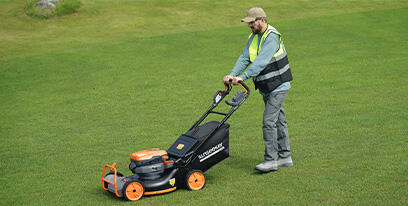
A standard push mower with no self-propulsion puts the full workload on you. Every step forward requires pushing the mower's weight against grass resistance and terrain. Calories burned pushing a lawn mower are the highest of any mowing method. On flat ground, expect roughly 165 to 230 calories burned mowing lawn with push mower per 30 minutes depending on your weight. Add hills or thick grass and that number climbs further.
For reference, calories burned pushing lawn mower 19 km (a distance that covers roughly 4000 m² of lawn in multiple passes) can reach 600 calories or more for an 80-kg person, depending on terrain and pace.
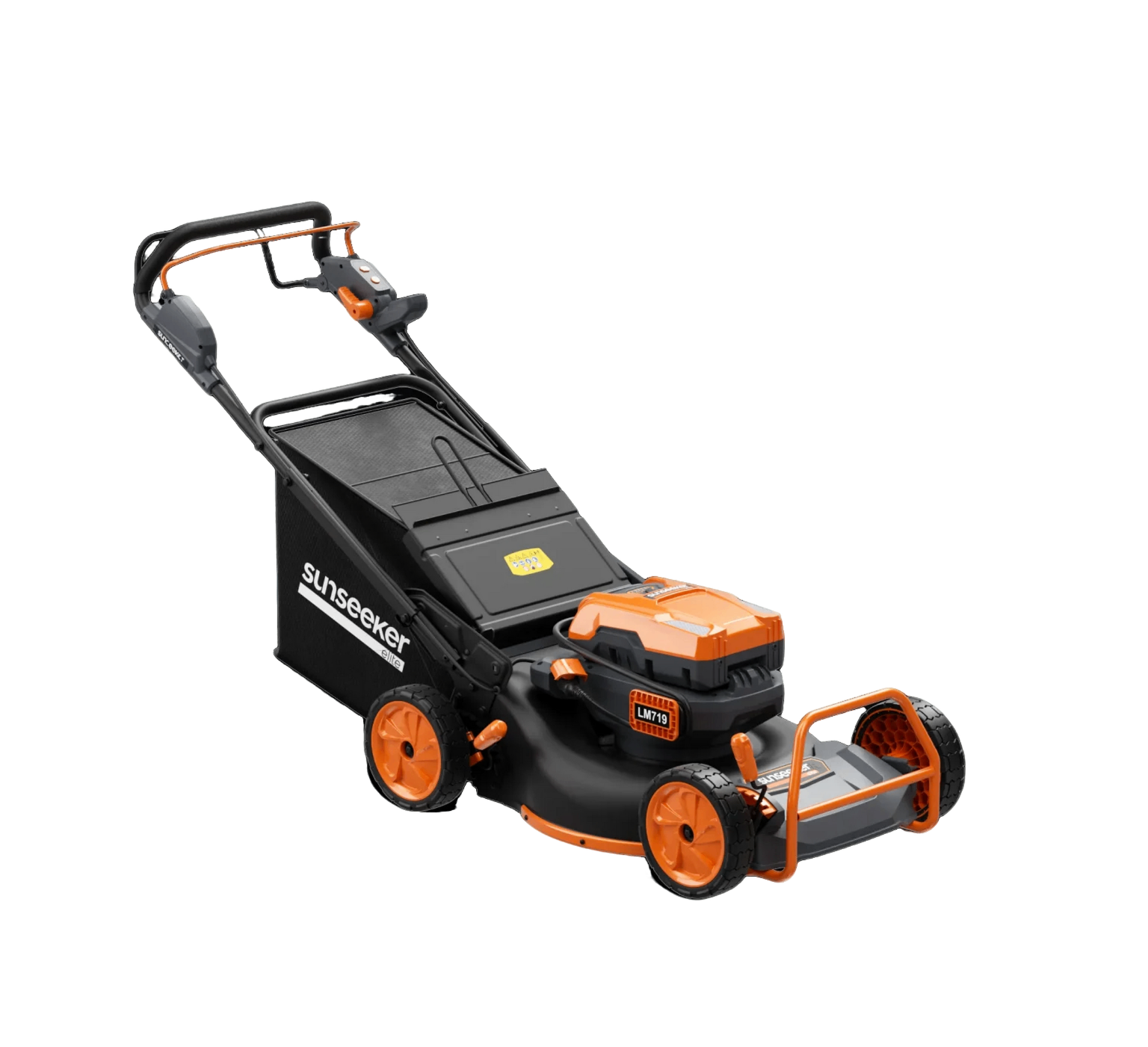
A self-propelled lawn mower drives its own wheels forward, so you're guiding rather than pushing. The calorie burn drops by roughly 10 to 15% compared to a non-propelled push mower. You still walk the full distance and engage your upper body to steer, but the sustained muscular effort of pushing is reduced. For people with joint issues or larger properties, this tradeoff makes practical sense even if the workout intensity is slightly lower.
A riding mower cuts calorie burn roughly in half compared to a push mower. You're seated for most of the session, so the physical demand comes mainly from steering and getting on and off the machine. Mowing yard calories burned on a riding mower fall closer to the output of light housework than cardio exercise.
A robotic mower operates on its own, so the calorie burn for the operator is zero during the mowing session. If your goal is exercise, a robotic mower won't deliver that. But for people who'd rather spend that time on an actual workout, or simply have other things to do, handing the job to a machine makes a lot of sense.
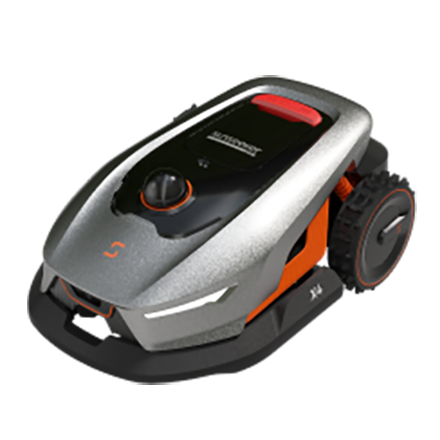
The Sunseeker Elite X4 automatically maps your lawn using 360° 3D LiDAR, plans its own mowing route, avoids obstacles day and night, and returns to its charging station when the battery runs low, all without any physical input from you.

The figures above are based on average conditions. Several variables shift the actual burn up or down.
Heavier bodies burn more calories performing the same task because more energy is required to move greater mass. The difference is significant. A 84-kg person burns roughly 40% more calories per 30-minute push mowing session than a 55-kg person doing the same job.
Slopes increase the calorie burn noticeably. Pushing a mower uphill engages your glutes, hamstrings, and calves far more intensely than flat ground mowing. Thick or overgrown grass also adds resistance to each push, raising the overall effort level. Calories burned mowing grass in hilly or dense conditions can run 20 to 30% higher than the same duration on flat, well-maintained turf.
Walking faster behind the mower raises your heart rate and increases calorie burn proportionally. A slow, steady pace through even lawn is moderate exercise. A quicker pace through uneven ground with frequent direction changes pushes the intensity closer to vigorous. Mowing lawn calories burned at a brisk pace can run 15 to 20% higher than the same duration at a leisurely walk.
If you're wondering what is the best time to mow lawn, choose a cooler part of the day and avoid periods of intense heat and humidity. Hot, humid conditions cause your cardiovascular system to work harder to maintain core temperature. Heart rate and perceived effort both rise, which translates to a modestly higher calorie burn. It also increases dehydration risk, so water intake matters more in summer sessions.
Knowing how to mow a lawn safely is just as important as understanding the calories it burns. Mowing is low-risk compared to most outdoor activities, but a few precautions make a real difference across a full season.
How many calories does mowing the lawn burn depends most on your body weight and the type of mower you use. Based on Harvard Health data, a 70-kg person burns around 162 to 198 lawn mowing calories per 30-minute session depending on mower type, with heavier users burning proportionally more. Terrain, pace, and conditions all shift the number from there. If you're mowing regularly anyway, counting it toward your weekly activity target makes sense.
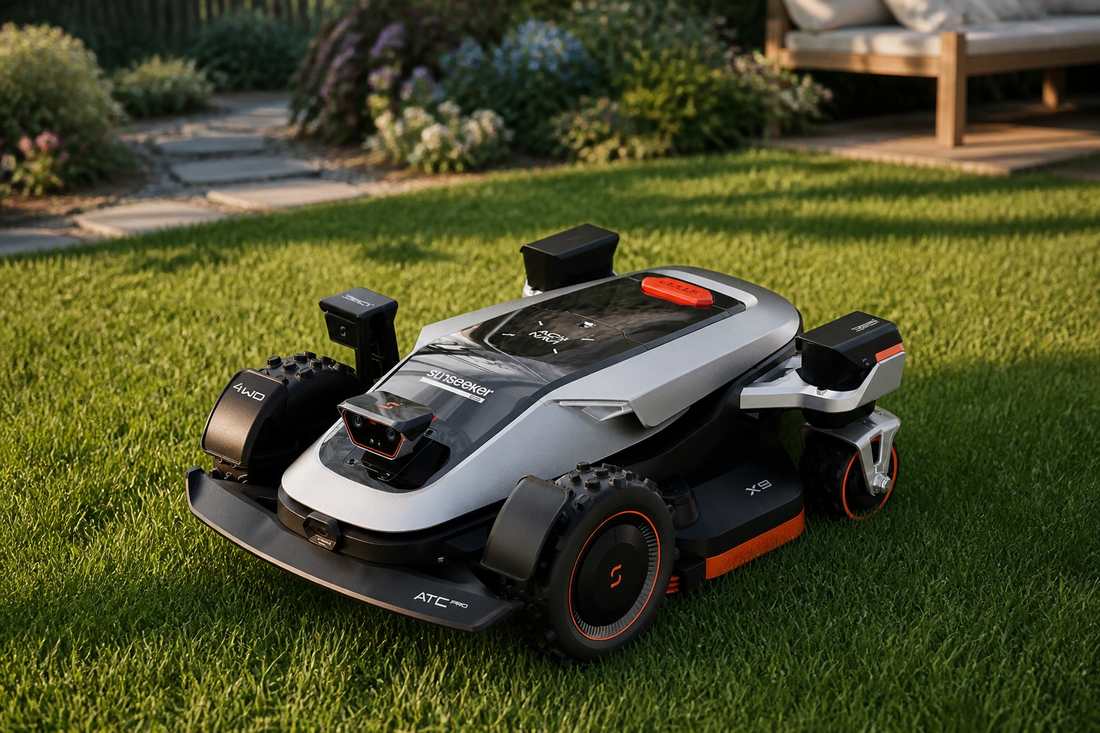
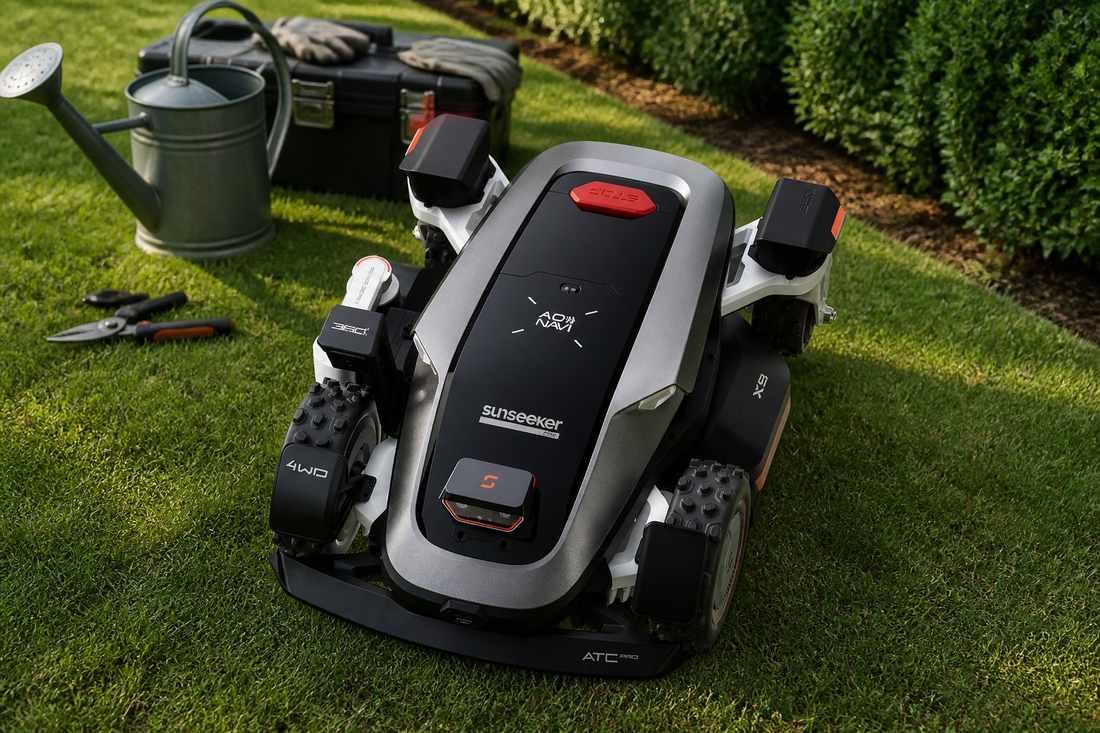
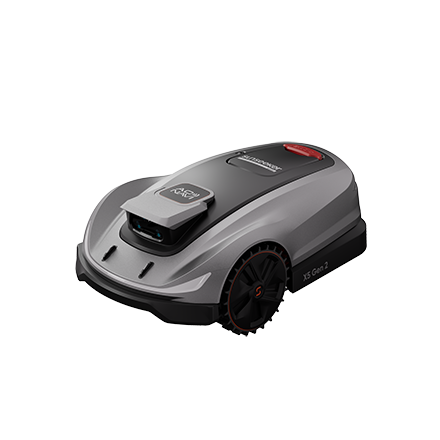
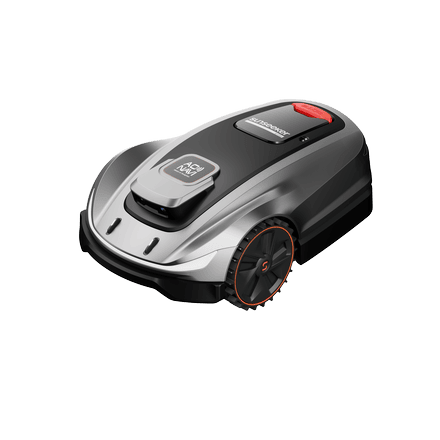
If you'd rather skip the physical effort and spend that time elsewhere, a robotic mower handles the lawn without any input from you. The Sunseeker Elite X5 is a compact option that navigates mid-size properties autonomously, including tight corners and decorative planting, on a schedule you set through the app.
Yes, especially with a push mower. Lawn mowing can count as moderate-intensity aerobic activity, close to brisk walking. A 30 to 60 minute session works your legs, arms, shoulders, and core while raising your heart rate. Many health guidelines recommend around 150 minutes of moderate activity each week, and regular garden work can help you reach that target.
Cutting grass can support weight loss, but only with a calorie deficit. A typical 30-minute mowing session may burn around 160 to 230 calories, depending on body weight, mower type, garden size, and slope. Push mowing on uneven ground uses more energy than an easy self-propelled mow. Along with balanced eating and regular activity, it can add up over time.
Calories burned mowing lawn for 30 minutes vary by weight and mower type. A 70 kg person may burn about 160 to 200 calories, while an 84 kg person may burn around 190 to 230 calories. Push mowing usually burns more than using a powered or self-propelled mower. Extra jobs like raking or weeding can raise the total, often adding another 100+ calories per 30 minutes.