



FAQs
2/9/2026
Contents
Products
Residential Lawns


Commercial Landscapes
Explore
Where to Buy


When selecting a robot mower, understanding how it moves across your lawn is as crucial as its cutting features. The drive system—whether Front-Wheel Drive (FWD), Rear-Wheel Drive (RWD), or All-Wheel Drive (AWD)—directly determines its capability to handle slopes, wet grass, and uneven terrain. This guide breaks down how each system works, its real-world strengths and weaknesses, and provides a clear framework to match the perfect drive type to the specific challenges and contours of your unique yard.
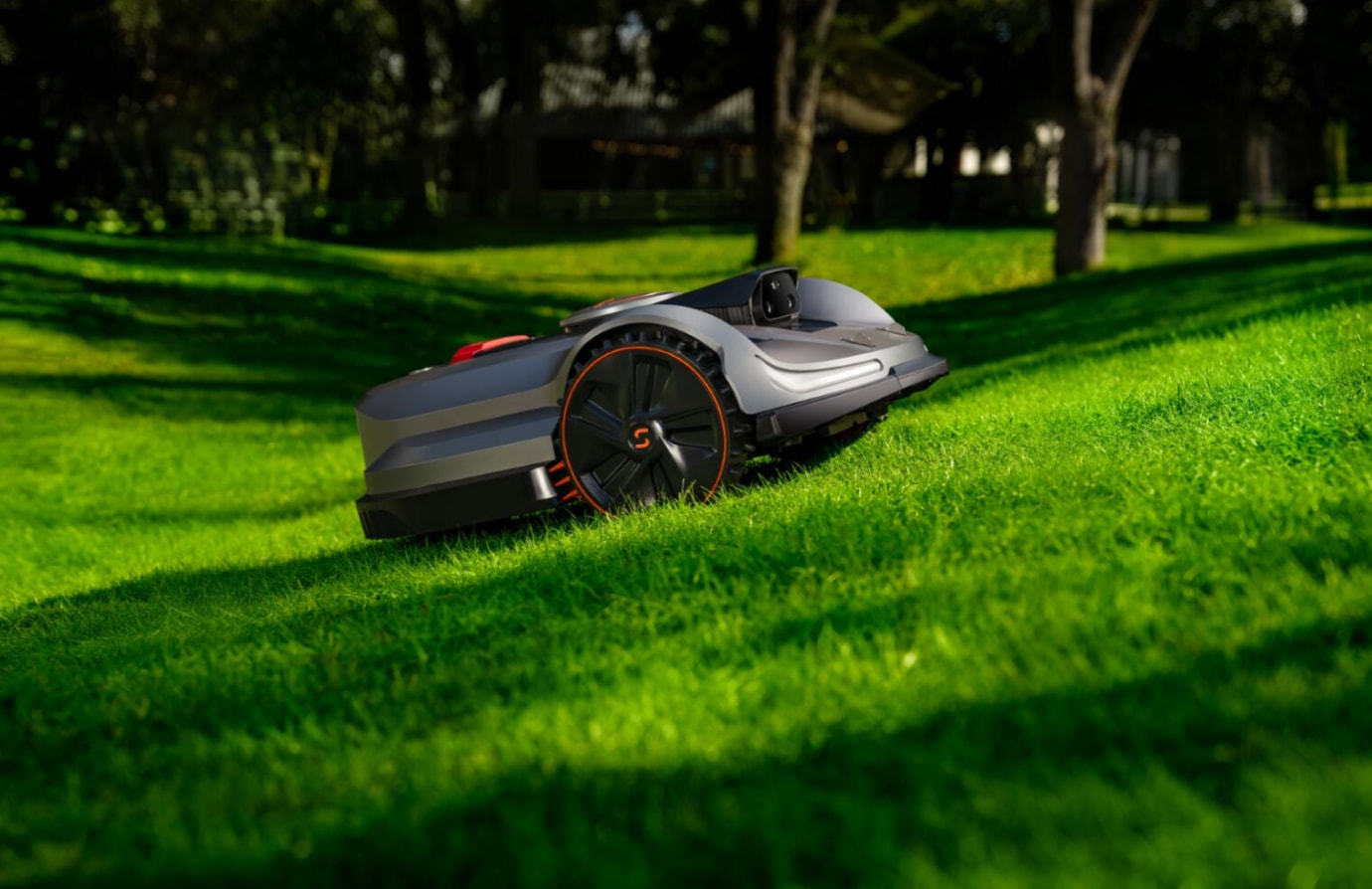
FWD, RWD, and AWD describe how power is delivered to a robot lawn mower’s wheels, directly affecting traction, stability, and terrain capability.
FWD (Front-Wheel Drive) models pull themselves forward and work best on flat, simple lawns. They are usually more affordable but can struggle on slopes or wet grass.
RWD (Rear-Wheel Drive) mowers push from the back, offering better grip when climbing gentle inclines and handling uneven ground more confidently than FWD.
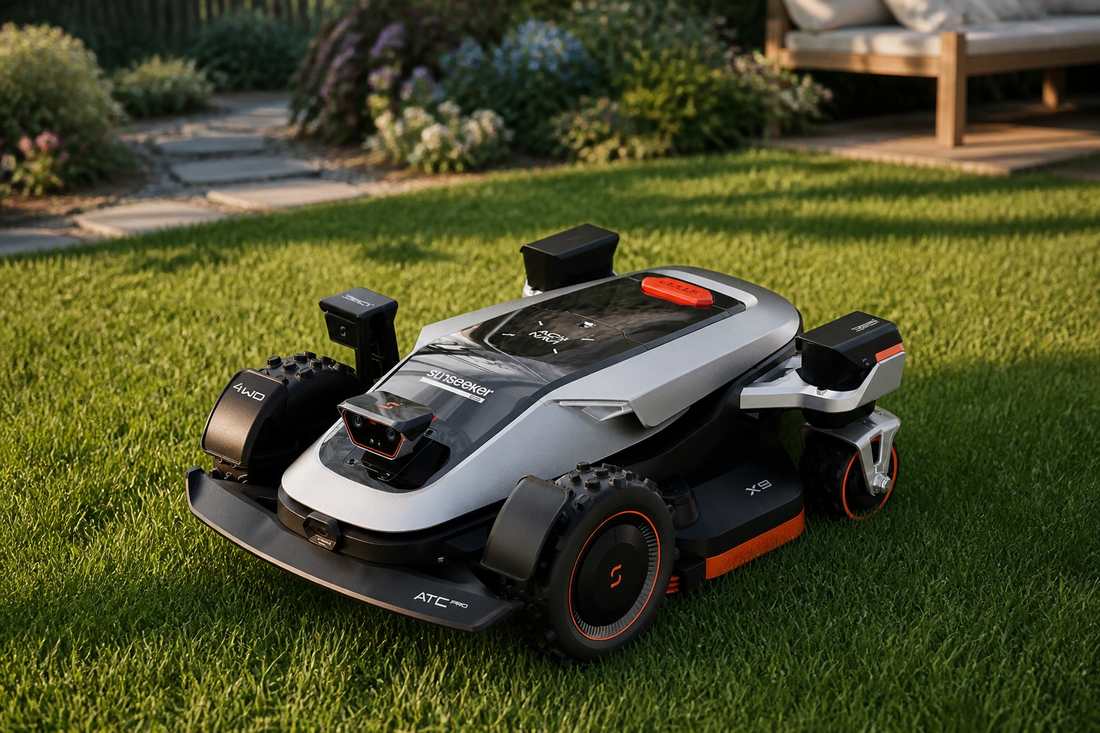
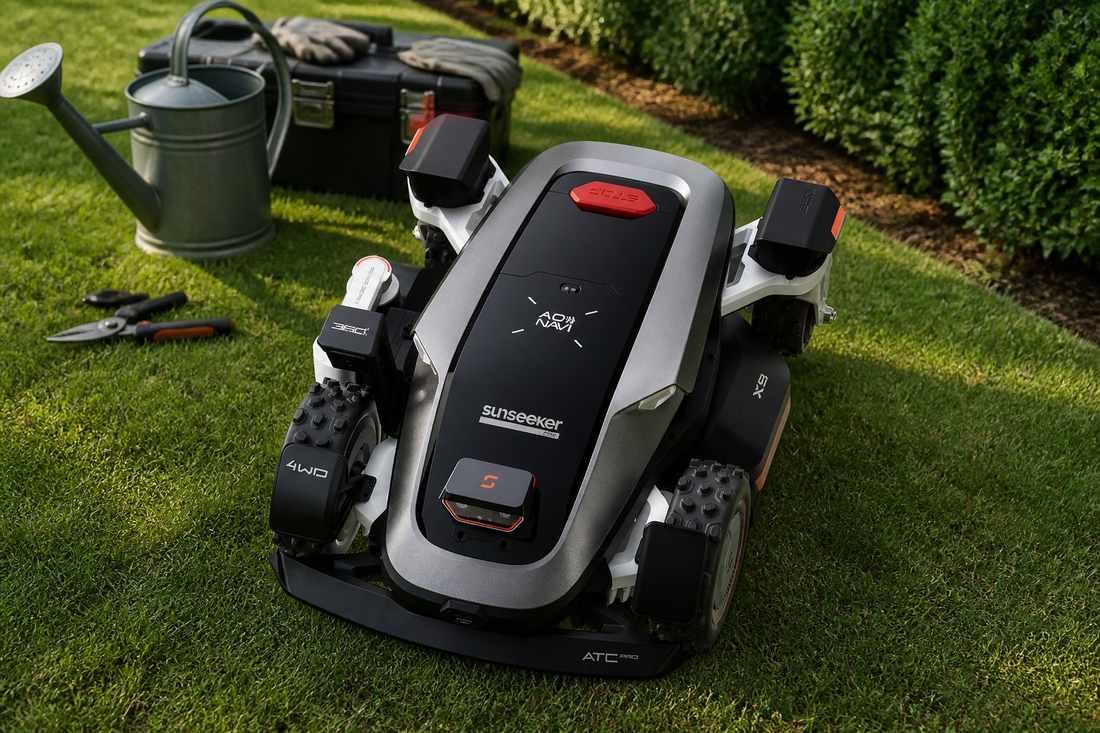
AWD (All-Wheel Drive) mowers powers all wheels simultaneously, delivering maximum traction and control. This setup excels on steep slopes, rough terrain, and complex lawns, making it ideal for challenging landscapes where consistent performance matters most.
Front-wheel drive is a common and pragmatic choice found in many entry-level and mid-range models. It offers a balanced package for typical suburban lawns.
In a typical FWD robot mower, a single central motor provides power. This power is transferred through a differential to the two front wheels, which then pull the machine forward. The rear wheels are not powered; they simply follow along and provide stability. The chassis is often designed with the cutting deck and a significant portion of the weight over or just behind the front axle, helping to keep the drive wheels planted.
Affordability: Simpler mechanical structure than AWD systems, usually resulting in a lower purchase price.
Agile Turning: Front-wheel pulling action enables tight, efficient turns on flat, firm lawns.
Efficient on Flat Terrain: Performs smoothly on even ground with relatively low energy consumption.
Simple Design: Fewer drive train components can mean easier maintenance and fewer mechanical variables.
Reduced Traction on Slopes: Weight shifts away from the front wheels when climbing, increasing the risk of wheel spin.
Poor Performance on Wet Grass: Loss of grip can occur even on mild inclines with dew or moisture present.
Soft Ground Issues: Driven front wheels may dig into soft soil while rear wheels drag, potentially causing ruts.
Limited Terrain Capability: Not ideal for lawns with frequent slopes or uneven conditions.
Rear-wheel drive takes a different approach, offering a distinct set of characteristics that can be advantageous in certain conditions.
In an RWD system, the motor drives the two rear wheels. The front wheels are dedicated solely to steering. To improve traction, the design often places heavier components like the battery toward the rear of the machine, putting more weight directly over the drive wheels. This setup is akin to many traditional push mowers and some automobiles.
Enhanced Uphill Traction: Rear drive wheels gain grip as weight shifts backward during climbing, improving performance on dry, moderate slopes.
Stronger Climbing Feel: Pushing force aligns with forward motion, delivering a more powerful and confident ascent.
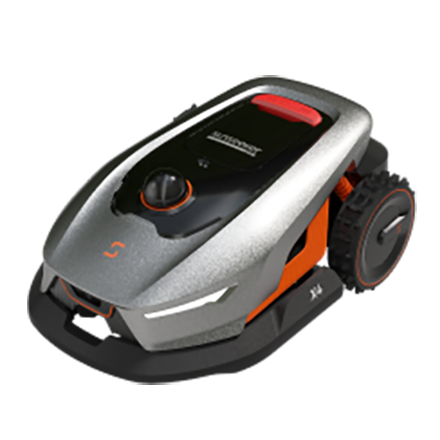
Better Slope Ratings: Often achieves higher effective uphill ratings than FWD on firm, dry turf. Models like the Sunseeker Elite X4, with its rear-wheel-drive design and climbing capability of up to 45% (24°), offer stable, controlled operation on sloped terrain without unnecessary complexity.
Balanced Cost-to-Performance Ratio: RWD offers an excellent balance of cost, performance, and durability, making it an ideal choice for most medium-sized lawns.
Reduced Downhill Stability: The rear-driven pushing force can make the mower feel less planted on downhill slopes or wet grass.
Increased Slippage Risk on Slick Surfaces: On damp or slippery turf, inconsistent traction may cause slight fishtailing, requiring conservative speed control.
Lower Agility in Tight Turns: RWD systems are generally less nimble than FWD when navigating narrow passages or complex layouts.
Sensitive Weight Distribution: Excessive rear weight can lighten the front end, reducing steering precision and overall control.
For lawns that present real challenges, All-Wheel Drive is the definitive solution, engineered to maintain grip where other systems falter.
True AWD in robot mowers typically involves multiple motors. A common configuration uses two independent motors to power the left and right sets of wheels respectively. This allows for advanced features like electronic differential action, where power is automatically shifted between sides for optimal turning and traction.
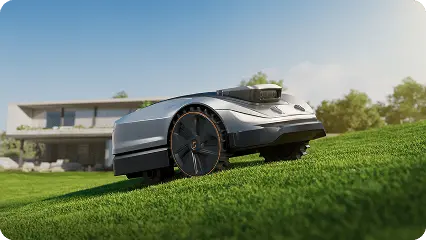
For example, the Sunseeker Elite X7 Gen 2 features a tri-wheel AWD system in which each wheel is driven independently, providing superior traction and precise control on steep slopes, wet grass, and uneven ground. With a climbing ability of up to 70% (35°), it clearly shows how advanced AWD engineering delivers stable, confident mowing performance in real-world lawn conditions.
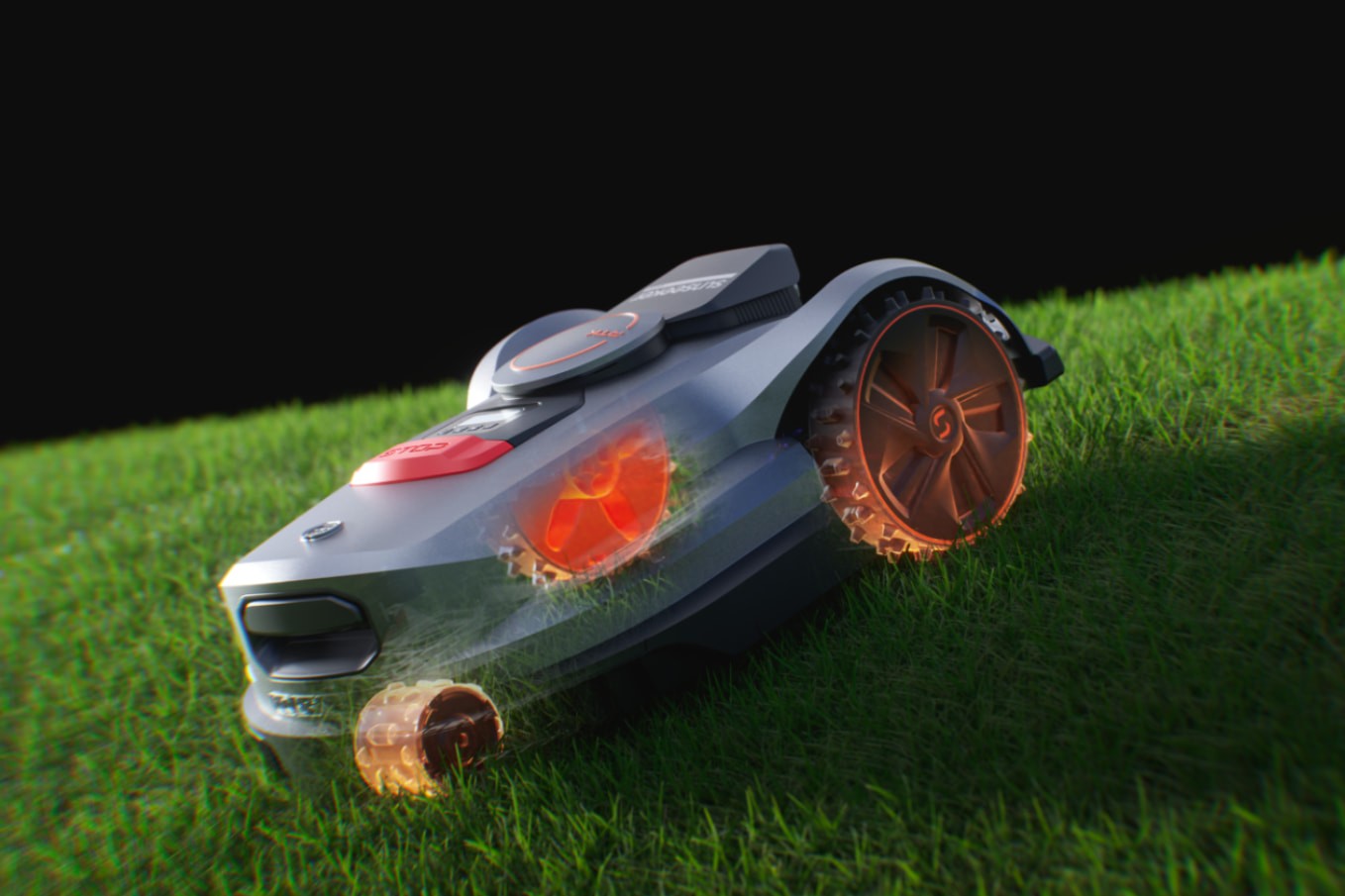
Unmatched All-Terrain Traction: Power delivered to all four wheels ensures consistent grip on steep slopes, wet grass, and loose or uneven surfaces.
Superior Slope Handling: Confidently manages extreme inclines (often over 35°) that are beyond the capability of FWD or RWD models.
Reliable Coverage: Minimizes wheel spin and stalling, delivering steady forward progress and complete lawn coverage even in challenging terrain.
Improved Stability and Safety: Even power distribution helps the mower stay balanced on uneven ground, reducing the risk of tipping or getting stuck.
Higher Upfront Cost: Dual motors and complex drivetrain increase manufacturing costs, making AWD the most expensive option.
Increased Energy Consumption: Powering four wheels typically reduces runtime per charge compared to simpler drive systems on flat lawns.
Complex Maintenance Needs: Additional motors and drivetrain components can mean higher repair costs and more involved servicing over the mower’s lifespan.
|
Feature / Characteristic |
Front-Wheel Drive (FWD) |
Rear-Wheel Drive (RWD) |
All-Wheel Drive (AWD) |
|
Primary Application |
Flat, even lawns with firm soil and no slopes. |
Lawns with gentle to moderate dry slopes and consistent terrain. |
Complex terrain with steep slopes, wet grass, uneven ground, or soft soil. |
|
Best For |
Budget-conscious users with simple, small to medium lawns. |
Users needing better uphill traction than FWD on dry, defined slopes. |
Large properties, challenging landscapes, and all-weather reliability. |
|
Traction & Climbing |
Poor on slopes and wet grass; prone to front-wheel slippage uphill. |
Good for dry, uphill climbs; may struggle downhill or on wet surfaces. |
Excellent on all slopes and surfaces; superior grip in all conditions. |
|
Turning & Maneuverability |
Very agile with tight turning radius; "pulls" into turns. |
Slightly less agile in tight spaces; can "push" wide in sharp turns. |
Stable and predictable, but turning radius may be slightly larger. |
|
Energy Efficiency |
Most efficient on flat terrain due to simpler drivetrain. |
Moderately efficient; good balance of power and consumption. |
Least efficient; higher power draw from multiple motors. |
|
Maintenance Complexity |
Lowest; simpler mechanical design with fewer components. |
Moderate; similar to FWD but with potential rear-drive specific wear. |
Highest; more motors, sensors, and complex components to maintain. |
|
Typical Cost |
Lowest initial investment. |
Moderate, often a mid-range price point. |
Highest upfront cost. |
Now that you understand the technologies, it’s time to put that knowledge to work in your own yard. Here’s a thoughtful assessment will lead you to the best choice.
Begin with an honest evaluation. Use a smartphone app with a level to measure the steepest slope on your property. Walk your lawn and note any persistent challenges: low, damp spots; uneven terrain from tree roots or animal activity; areas of particularly soft or sandy soil. These observations are your key data points.
For Mostly Flat, Firm, and Dry Lawns
A Front-Wheel Drive (FWD) mower is the most cost-effective and efficient option. It performs reliably in these straightforward conditions and delivers excellent coverage without unnecessary complexity.
For Lawns with Consistent, Moderate Slopes (up to around 25°)
A Rear-Wheel Drive (RWD) mower is a smart step up. It provides stronger, more dependable traction when climbing dry inclines, outperforming FWD on sloped terrain while maintaining good efficiency.
For Lawns with Steep Slopes, Wet Zones, or Soft, Uneven Ground
An All-Wheel Drive (AWD) mower is essential rather than optional. Designed for maximum traction and stability, it ensures safe, consistent mowing across challenging terrain without slipping, stalling, or getting stuck.
When finalizing your choice, aim for a practical balance between budget and performance. While it's wise to choose a mower that can handle your lawn's toughest area, also consider your long-term needs and financial plan. The most premium system isn't always necessary if your terrain is mostly mild. Prioritize a reliable solution that matches your current landscape's true demands without overspending.
The journey to find the ideal robotic mower drive is about matching technology to your lawn's unique personality. Flat, simple yards thrive with efficient FWD designs, moderate slopes benefit from the added climbing confidence of RWD, while challenging terrain with steep grades or soft ground truly demands AWD capability.
Sunseeker Elite Robotics offer models with the three different drive types, allowing you to choose a mower that conquer the exact slopes and conditions of your lawn. They’re also paired with advanced navigation, intelligent obstacle avoidance, and quiet, automated operation. Ultimately, you will gain a reliable partner that automate the mowing chore and perfectly adapts to your outdoor space, giving you back more time to simply enjoy it.
An AWD system provides superior traction on wet grass. Its power distribution to all wheels minimizes slippage, ensuring consistent progress and clean cuts, while 2WD models may struggle with wheel spin in persistently damp conditions.
Yes. Drive systems influence energy use. AWD models typically consume more power because multiple motors run simultaneously, while FWD and RWD designs are more energy-efficient on suitable terrain, often allowing longer mowing sessions per charge.
Absolutely. Soil compaction, drainage, landscaping changes, or increased shade can alter traction over years. Choosing a drive system with some performance headroom can help future-proof your mower against evolving lawn conditions.