





FAQs
5/28/2026
Contents
Products
Residential Lawns


Commercial Landscapes
Explore
Where to Buy


Mowing a large, sloped lawn can be tiring without extra support, and that’s where self-propelled mowers stand out. Push mowers feel nimble and responsive, making it easier to move around obstacles and care for smaller yards. Take a closer look at their differences to narrow down the right option!
Are you staring at your growing lawn, unsure whether a self-propelled mower or a traditional push mower will make the job easier? Many homeowners face the same dilemma, wondering if the extra cost of a self-propelled model is worth it, or if a simpler push mower will handle their yard just fine. This guide breaks down the self-propelled vs push mower debate, exploring how each works, their types, pros and cons, side-by-side comparisons, and expert tips to help you choose the right one!
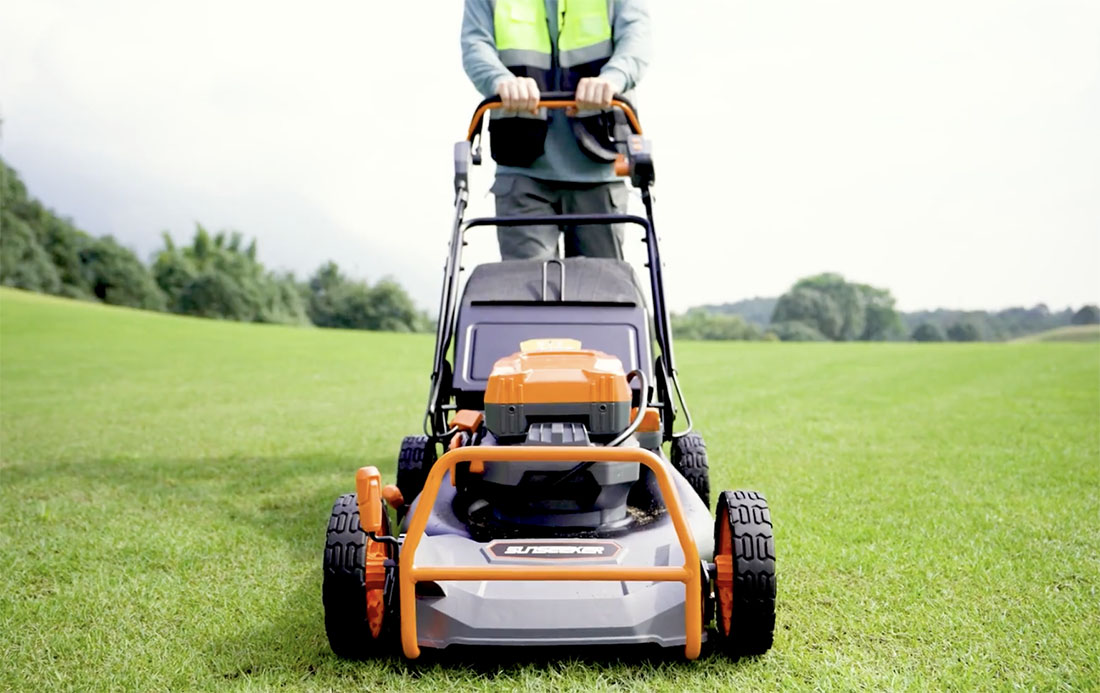
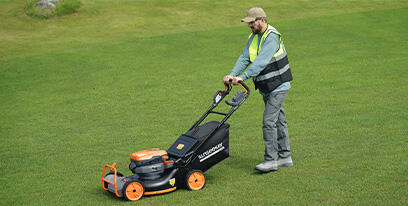
A self-propelled mower features a built-in drive system that powers the wheels, moving the mower forward while you guide it. You control direction and speed, but the machine handles most of the physical effort.
The engine or motor powers both the cutting blades and the drive system (often via belts, cables, or gears connected to the wheels). Most models include a bail lever or variable-speed control on the handlebars. Users can engage it to activate propulsion at their preferred pace.
Self-propelled mowers come in front-wheel drive (FWD), rear-wheel drive (RWD), or all-wheel drive (AWD). While RWD and AWD offer superior traction on hills, FWD excels in maneuverability on flat terrain.
Self-propelled mowers offer convenience and efficiency, but they also come with certain trade-offs that buyers should be aware of.
Pros:
Cons:
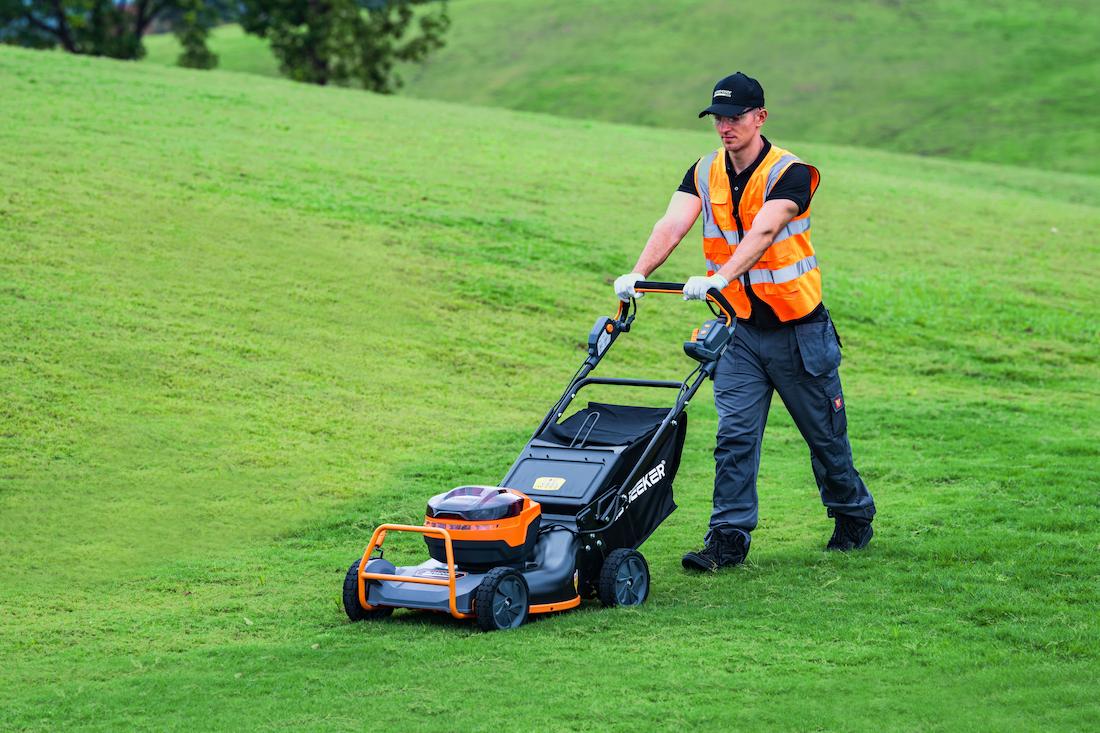
Unlike the self-propelled model, a push mower relies entirely on your physical effort to move forward. The engine/motor powers the blades only. It’s a simple, classic option for smaller yards.
You push the mower to propel it while the engine spins the blades. No drive system connects to the wheels, so speed and movement depend on your pace and strength. Its simplicity provides precise control for mowing around obstacles like trees or flower beds.
Push mowers come with several benefits and limitations that homeowners should consider before making a decision.
Pros:
Cons:
The key difference between a push mower and self propelled is propulsion. While push mowers rely on human power, self-propelled models assist movement. This distinction affects effort, speed, terrain suitability, cost, and long-term convenience. Here’s a brief push vs self propelled mower comparison.
|
Feature |
Self-Propelled Mower |
Push Mower |
|
Propulsion |
Drive system powers wheels |
User provides all forward motion |
|
Best For |
Medium-large lawns, slopes, uneven terrain |
Small-medium flat lawns, tight spaces |
|
Physical Effort |
Minimal (guide only) |
High (full pushing) |
|
Speed/Efficiency |
Consistent 5–6.5 km/h, faster overall |
Variable 3–5 km/h, slows with fatigue |
|
Weight |
45-110+ lbs (20-50+ kg) |
35-65 lbs (16–29 kg) |
|
Maneuverability |
Good in open areas, harder in tight spots |
Excellent around obstacles |
|
Cost |
Higher ($330-$2,200+) |
Lower ($130-$800) |
|
Maintenance |
Higher (drive components) |
Lower (simpler design) |
|
Power |
Stronger engines/motors |
Adequate for lighter duty |
|
Noise Level |
86-96 dB (slightly louder due to drive system) |
85-94 dB |
When choosing between a self-propelled lawn mower vs push mower, it helps to think about your yard, your budget, and how much effort you want to put into mowing. Here are two simple ways to decide:
Choose a self-propelled mower if:
Choose a push mower if:
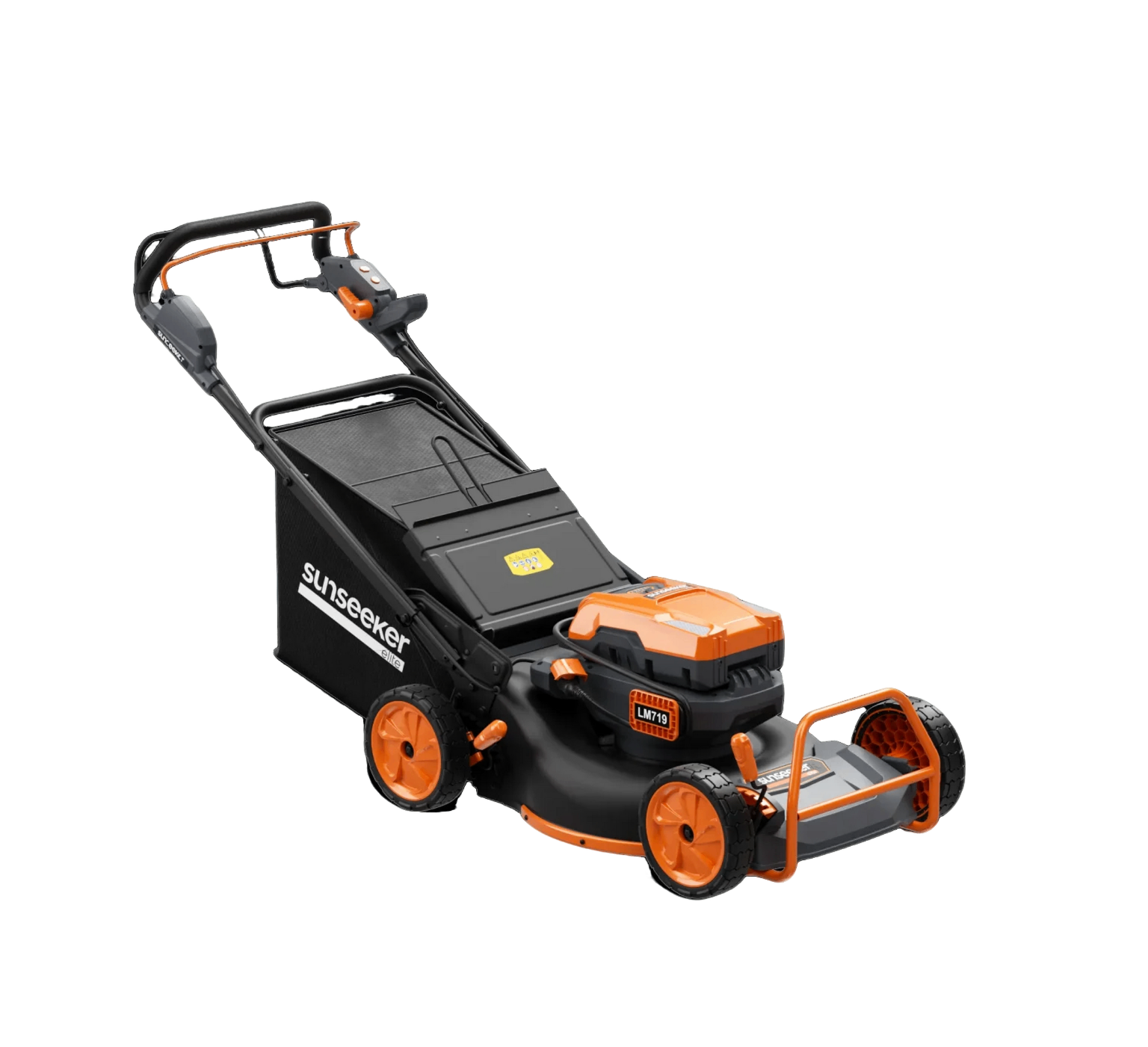
For a high-performance option, consider the Sunseeker Lawn Mower. This powerful 56 cm mower features a durable steel deck, an innovative dual-blade system for a cleaner cut, and 3-in-1 functionality. With seven adjustable cutting heights and quiet, low-vibration operation, it offers exceptional efficiency and reliable performance for homeowners.
When asking what is a self propelled lawn mower, it helps to understand that this type of mower powers its own wheels, reducing the effort needed to move across the lawn. In the self-propelled vs push mower comparison, self-propelled models are better suited to large or hilly lawns, while push mowers offer affordability and simplicity for smaller, flatter yards. For a reliable and efficient mowing solution, explore Sunseeker’s innovative lineup and enjoy a smoother, hassle-free mowing experience.
It depends on your lawn and needs. Self-propelled mowers are ideal for medium-to-large yards and slopes. It’s also suitable for anyone who wants less physical effort since they maintain a consistent speed and handle uneven terrain well. Push mowers suit small, flat yards if you value maneuverability and simplicity. You should consider yard size and fitness to make a decision.
Self-propelled mowers are heavier and cost more upfront. It can be harder to lift or maneuver them in tight areas. They require additional maintenance for drive components and may consume slightly more fuel or energy. On flat, obstacle-filled lawns, their weight can feel cumbersome compared to lighter push models.
Yes, but it’s less convenient. Most models require disengaging the drive system first, then pulling backward. Extra weight and drive components add resistance, which makes reversing harder than with a push mower. You can practice on flat ground and check your mower’s manual for safe operation to prevent any damage.