





FAQs
8/19/2026
Contents
Products
Residential Lawns












Commercial Landscapes
Explore
Where to Buy


Even lime coverage matters more than dumping extra product on pale spots. Test first, choose the right lime type, and walk crosswise spreader passes at a labeled rate. Water lightly so particles leave the blades, split large doses, and keep pets off until the dust has settled into the soil surface.
Your lawn may look thin, pale, or mossy even after you mow, water, and feed it carefully. When that happens, the problem may sit below the grass blades. Acidic soil can block nutrient uptake, so fertilizer works poorly and grass struggles to grow dense roots.
That is where lime can help, but only when the soil actually needs it. This blog explains how to spread lime on your lawn evenly, how much to use, when to apply it, and which common mistakes can leave the grass stressed instead of stronger.

Spreading lime on your lawn can improve growing conditions when the soil is too acidic. Lime does not act like a regular fertilizer, but it can help correct soil pH so grass roots can use nutrients more effectively. A soil test should always confirm that lime is needed before application.
The right amount of lime depends on soil pH, soil texture, lawn size, and the lime product. Sandy soil generally needs less lime to change pH than heavier clay soil, while clay-rich soil may require more because it resists pH changes.
For an established lawn with acidic soil, a practical general range is 11 to 23 kg of lawn lime per 100 m² per application. Use the lower end when the soil is only slightly acidic or sandy. The upper end may be more appropriate when acidity is greater, or the soil is heavier. A soil test should still guide the final amount because two lawns with the same pH can have different lime requirements.
Situation | Typical guidance | Why it matters |
Soil pH is slightly low | About 11 kg per 100 m². | A lighter application may be enough for a small pH correction. |
Soil pH is moderately low | About 18-23 kg per 100 m². | A stronger application may be appropriate when more pH correction is needed. |
Clay or heavy soil | Start around 18-23 kg per 100 m², or follow the soil-test rate | Clay-rich soil has greater buffering capacity and often requires more lime than sandy soil to change pH. |
Unknown soil pH | Test before applying lime. | Lawn symptoms alone cannot confirm acidic soil or tell you how much lime is needed. |
Fall is often the easiest time to lime a lawn because cooler weather, regular moisture, and slower top growth give the soil time to react before spring. Early spring can also work if the lawn is not frozen, soaked, or under heat stress. Lime reacts slowly, so timing should focus on soil conditions more than quick visible results.
Avoid applying lime during drought, extreme heat, frozen ground, or heavy rain. A calm, dry day is best for spreading, followed by light watering. If you plan to seed, follow your soil report and seed label guidance. Lime and seed can often be part of the same renovation season, but very heavy lime rates may need spacing.
Even coverage matters as much as the total amount. Lime that lands in streaks can create uneven pH correction, dusty residue, and patchy results. Work slowly, measure the area first, and use a broadcast or drop spreader instead of throwing lime by hand.
Use a soil test before buying lime. Home test kits can give a rough reading, but a lab test is better because it can show pH, buffer pH, and a recommended lime rate. Take several small soil cores across the lawn at about 8 to 10 cm deep, mix them in a clean container, and send or test the blended sample. Do not sample right after fertilizing or liming, because the result may be misleading.
Pelletized lime is the easiest option for most homeowners because it spreads cleanly with a lawn spreader and creates less dust than powdered agricultural lime. Fast-acting lime products may work with lower application rates, but you should still follow the label carefully. Do not use hydrated lime or quicklime on a home lawn unless a qualified local expert specifically recommends it, as these forms can be harsh and difficult to handle safely.
Before you start, measure your lawn area and divide the total lime amount into two equal portions. Set the spreader according to the lime label, then test it on a small hard surface or an inconspicuous strip if needed. The goal is steady flow, not a heavy dump. Wear gloves, closed shoes, long sleeves, and eye protection, especially when handling dusty products.
Spread the first half while walking in straight rows across the lawn. Then apply the second half at a right angle to the first pass. This crosswise pattern helps reduce streaks and missed strips. Keep the spreader moving before you open the hopper, and close it before stopping or turning. Sweep any lime off sidewalks, driveways, and patios so runoff does not carry concentrated material into one area.
After spreading, water lightly to move lime off the grass blades and into the soil surface. About 6 mm of water is usually enough unless the product label says otherwise. Do not flood the lawn, because runoff can move lime away from the target area. If rain is expected, a gentle shower is helpful; a heavy storm is not.
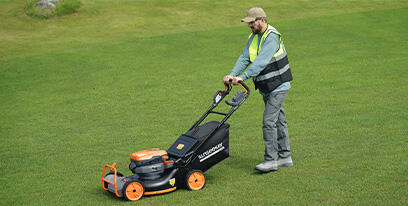
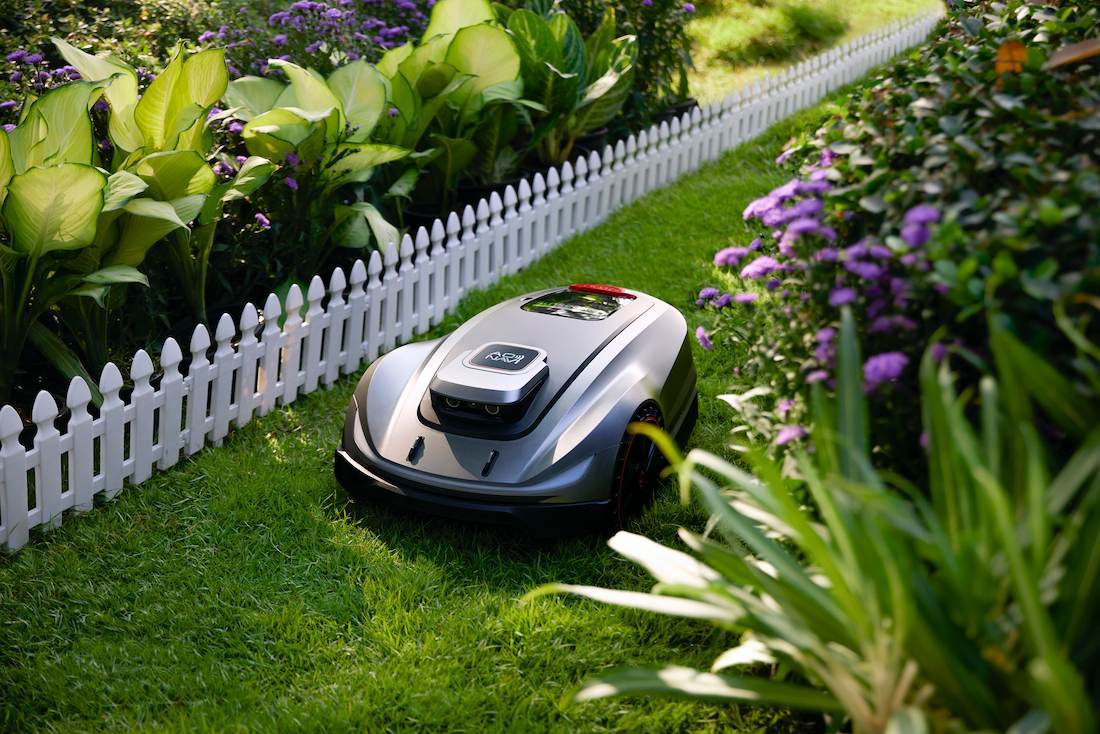
Once soil correction is underway, consistent mowing helps the lawn respond cleanly. A mower such as the Sunseeker Elite X5 can support routine upkeep on established grass with AONavi positioning and app-based mowing schedules, which helps keep growth at a steady height while you monitor pH, watering, and fertilizer response over the following weeks.
Lime is simple to apply, but the wrong approach can waste product or create new lawn problems. Check these points before you start, especially if this is your first time using lime.
Learning how to spread lime on your lawn starts with testing, not guessing. Once you know the soil pH and recommended rate, choose a lawn-safe lime, apply it with a spreader in crosswise passes, and water it in gently. Lime is a long-term soil correction tool, so give it time and keep the rest of your lawn care steady. If regular mowing is part of that plan, Sunseeker’s robot lawn mowers can help you maintain a cleaner routine while the lawn improves.
You can often apply lime and fertilizer in the same season, but it is usually better to separate applications by a few days or weeks. This gives each product a clearer job and reduces handling mistakes. Always follow your soil test and product labels, especially if the fertilizer contains herbicide or other active ingredients.
Yes, lime should be watered in lightly after application. Water helps move particles off grass blades and into the soil surface, where lime can begin reacting. About 6 mm of water is usually enough. Avoid heavy watering that causes runoff, because it can move lime into low spots or hard surfaces.
Only lime when a soil test shows that pH is too low. Many lawns do not need lime every year. In acidic soils, testing every 2 to 3 years is a good habit. After applying lime, wait several months before retesting because soil pH changes slowly, especially in clay-heavy ground.