


























A thin lawn can make the whole yard feel unfinished, especially when bare soil turns dusty in sun or muddy after rain. The fastest fix is not dumping extra seed and hoping for the best; it is creating the right seed-to-soil contact, moisture routine, and early care plan. If you want quick, even growth without wasting a weekend or a bag of seed, start with the basic sequence below.

FAST TRACK TIP: What Actually Speeds Up Growth the Most
If only two factors determine how fast grass appears, they are:
- Seed-to-soil contact quality
- Moisture consistency during germination
Everything else (fertilizer, mowing, even seed type selection) has a secondary impact compared to these two. Poor contact or inconsistent drying can delay germination by several days and create uneven growth patterns that slow full lawn coverage.
Step-by-step Lawn Seeding Plan for Fast Growth
Fast lawn growth is not about doing more steps—it’s about doing the right steps in the right order, where each action removes a specific barrier to germination and early root formation. The speed of establishment is mainly determined in the first 10–14 days, when seed-to-soil contact and moisture consistency directly control how quickly sprouts appear and how evenly they develop.
Choose the Right Grass Seed for Your Climate (Speed Depends on Type)
Start with seed matched to regional growing conditions.
Cool-season grasses and warm-season grasses do not just grow in different temperatures—they germinate at different speeds under the same conditions.
Within each category, choose a seed blend designed for your sunlight exposure and yard usage level. A well-matched seed establishes faster because it spends less energy adapting to unsuitable conditions and more energy on early root development.
Prepare Soil for Maximum Seed-to-Soil Contact (MOST IMPORTANT)
This step has the highest impact on germination speed.
Grass seed needs direct contact with loose, receptive soil to absorb moisture and activate germination. If seed sits on compacted ground, debris, or thatch, it dries out quickly and germination becomes inconsistent. This is especially important when growing a lawn from dirt, because there is no existing turf canopy to protect seed or help hold moisture at the surface.
Prepare the surface by:
- Removing debris and dead grass
- Loosening the top layer of soil
- Leveling uneven spots to avoid water pooling or runoff
- Creating a slightly rough surface so seeds can settle into contact points
The goal is simple: eliminate any barrier between seed and soil surface.
Spread Seed Evenly to Avoid Patchy Growth
Even coverage is not about appearance—it directly affects speed.
When seed is distributed unevenly, dense clusters compete for moisture and light, while thin areas take longer to fill in. Both conditions slow overall lawn establishment.
Use two light passes from different directions instead of one heavy application. After spreading, lightly rake the surface so seeds are partially embedded rather than sitting exposed.
Watering Strategy That Accelerates Germination
Watering is not about volume—it is about stability.
During germination, the top layer of soil must remain consistently moist so seeds can activate without interruption. Dry–wet cycles reset the germination process for many seeds and delay uniform sprouting.
The effective pattern is:
- Light, frequent watering to maintain surface moisture
- Gradual shift toward deeper watering after sprouts emerge
The key is preventing the soil surface from drying out before seedlings establish root contact.
When and How to Use Starter Fertilizer Without Slowing Growth
Starter fertilizer supports early root development when soil nutrients are insufficient, but timing and dosage matter more than strength.
Apply only a light, evenly distributed layer if soil conditions require it, and follow product guidelines precisely. The objective is to support early root formation—not to accelerate top growth.
Excess fertilizer at this stage leads to imbalanced growth, where shoots develop faster than roots can support.
First Mowing Timing That Strengthens Root Development
Mowing begins only after grass has reached a stable height that can tolerate cutting without disturbance.
The first cut should remove only the upper portion of the grass blades using a sharp mower blade. This helps the lawn thicken horizontally while roots continue deepening below the surface.
Mowing too early disrupts young seedlings and slows uniform establishment, especially in areas where soil is still adjusting after seeding.
Growth Timeline — What Fast Lawn Establishment Actually Looks Like
Fast lawn growth follows a predictable sequence, but progress is not evenly distributed. Most visible change happens after germination begins, while the earliest stage is primarily about soil activation and moisture response rather than visible growth.
Day 1–7: Germination Phase
The surface still looks mostly unchanged. In some areas, soil may appear slightly darker from consistent moisture, but visible grass is minimal or absent.
Maintain steady surface moisture so seeds remain active. The goal during this phase is uninterrupted germination conditions rather than visible growth. Avoid disturbing the soil surface, as seeds are still establishing initial root emergence.
Week 2–3: Early Sprouting and Coverage Start
Thin green shoots begin to appear, often unevenly at first. Some areas may look fuller while others lag behind, depending on soil contact consistency and moisture uniformity.
Continue light, consistent watering and avoid foot traffic across the seeded area. At this stage, seedlings are still fragile and uneven zones should not be corrected aggressively. The focus is maintaining stable conditions so sprouting spreads evenly.
Week 4–6: Lawn Thickening Phase
Grass begins filling in gaps, forming a more continuous surface. Color becomes more uniform, and the lawn starts to resemble a usable yard rather than newly seeded soil.
Begin light mowing when grass reaches appropriate height, using sharp blades and minimal cutting height. This encourages lateral thickening. Transition from surface-level moisture care to a more structured watering pattern that supports deeper root development.
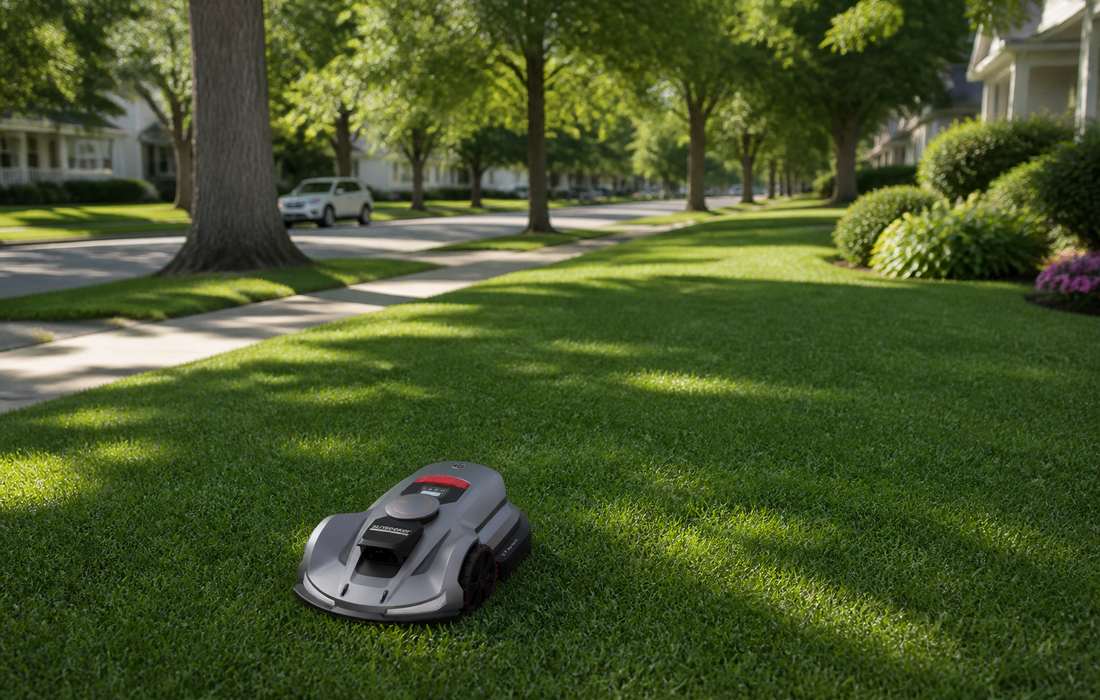
At this stage, mowing consistency becomes more important than manual effort. Many homeowners gradually shift toward automated maintenance tools such as the Sunseeker Elite X7 Gen 2, which helps maintain regular cutting frequency once the lawn is fully established and stable enough for routine mowing patterns, especially with a robot lawn mower designed for consistent, low-effort maintenance.