








FAQs
5/28/2026
Contents
Products
Residential Lawns



Commercial Landscapes
Explore
Where to Buy


Starting a push mower correctly depends on the type you own. Gas models have the longest checklist, while battery and corded electric options are noticeably simpler. A little preparation before each session and basic upkeep between uses keeps most starting problems from happening in the first place.
How do you start a push mower if it keeps giving you trouble? In most cases, the answer is a missed step in the starting sequence rather than a mechanical problem. This guide walks through how to start each type of push mower correctly, what to check beforehand, and how to troubleshoot when the mower refuses to cooperate.

A quick pre-start check takes about two minutes and prevents most starting problems before they happen.
Of course, before starting up, it's also worth clearing the mowing area. Walk the yard and remove sticks, stones, toys, or anything the blade could hit. It takes a minute and protects both the mower and anyone nearby.
Gas push mowers are the most common type, and how to start a push mower with a pull cord follows a specific sequence. Doing the steps out of order is the most common reason it won't fire on the first pull.
1.Check fuel and oil.Confirm the tank has fresh fuel and the oil is at the correct level.
2.Set the choke.Move the choke to the closed position for a cold engine. Skip it if the engine is already warm.
3.Set the throttle.Move it to the "fast" or "run" position. Some mowers combine throttle and choke into one lever.
4.Prime the engine.Press the primer bulb three to five times until you feel resistance.
5.Engage the operator presence bar.Hold the bar firmly against the handle. Most mowers won't start without it.
6.Pull the starter cord.Pull in one firm, smooth motion. If it doesn't catch after three or four pulls, wait 30 seconds before trying again. Repeated pulls without a pause can flood the engine.
7.Open the choke.Once the engine starts, move the choke to open to let it warm up.
Electric push mowers have no choke, no priming, and no pull cord. Starting a push mower on electricity is a much shorter process, with steps varying slightly between battery and corded models.
Battery mowers are the most popular electric option for residential yards. Here's how to start one:
1.Install the battery.Slide the charged battery into the mower's battery slot until it clicks into place. Make sure the contact points are clean and free of debris.
2.Engage the operator presence bar.Hold the bar firmly against the handle, just as you would on a gas mower. The mower won't run without it.
3.Press the start button.Most battery mowers have a single start button. Hold the operator bar and press it to start. The blade engages immediately.
Corded mowers remove battery concerns entirely but require a power outlet and cord management.
1.Connect the extension cord.Use a heavy-duty outdoor extension cord rated for the mower's amperage. Connect it to the mower's power inlet before plugging into the outlet.
2.Plug in at the outlet.Once the cord is connected to the mower, plug the other end into the outlet.
3.Engage the operator presence bar and start switch.Hold the bar and press or flip the start switch. The mower starts immediately with no warm-up needed.
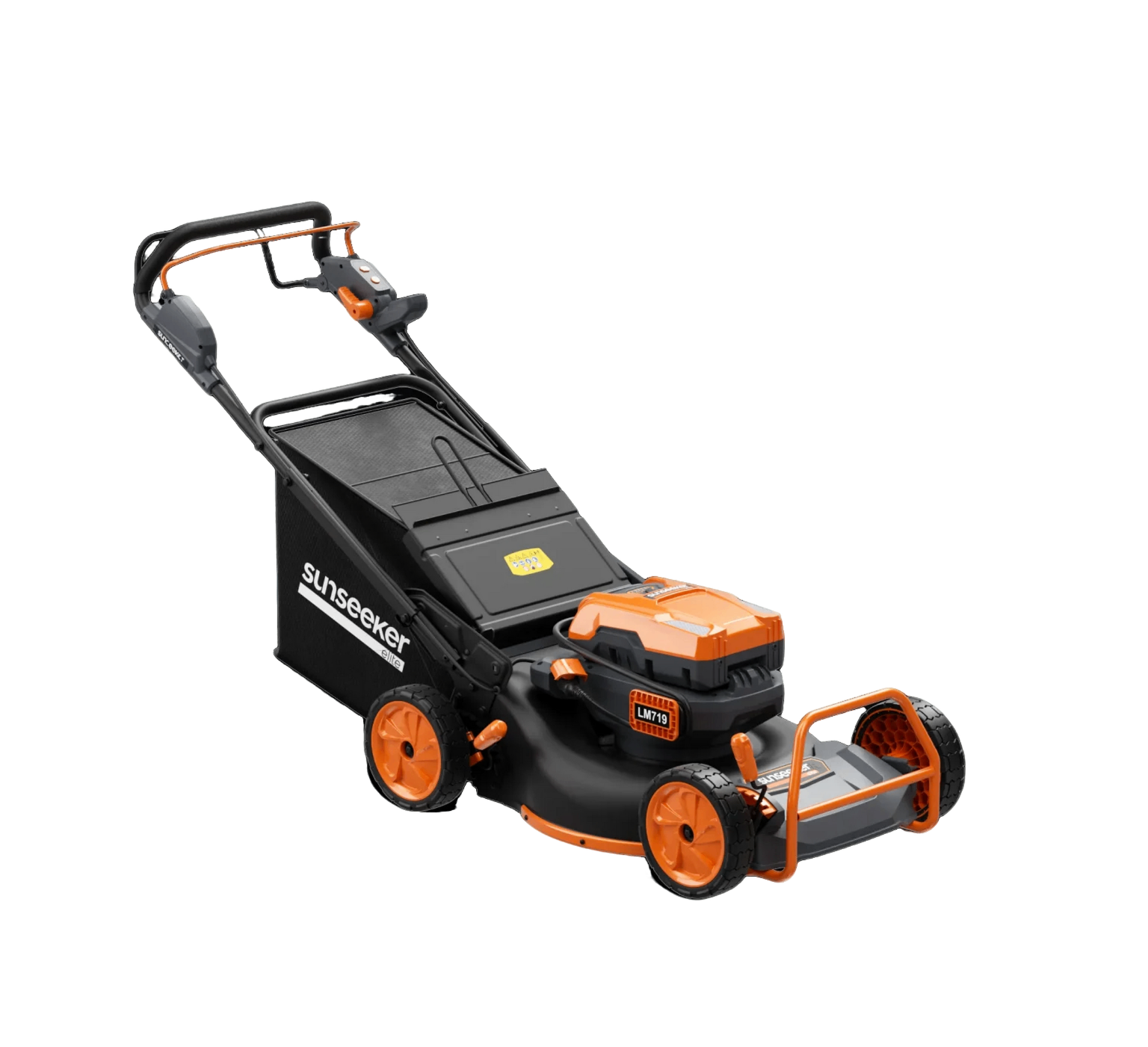
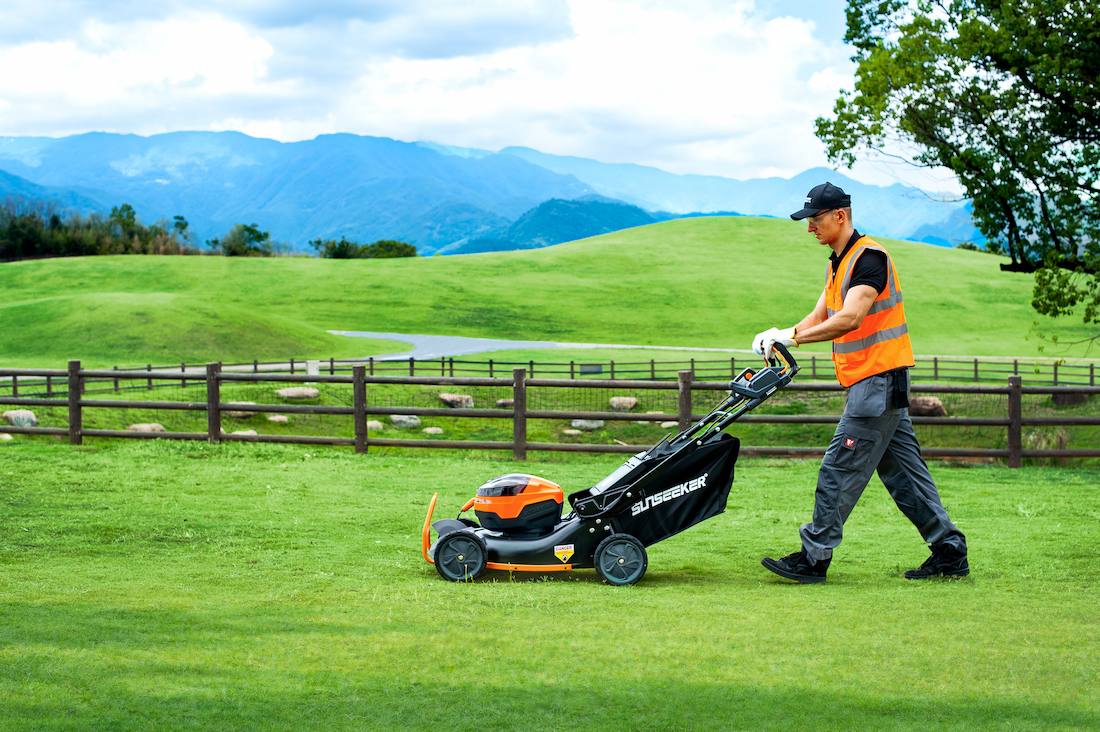
For those looking for a corded option that's always ready without any charging wait, the lawn mower from Sunseeker Elite plugs directly into an outlet and starts immediately every time. Unlike most mowers that run a single blade, it uses a dual-blade system that cuts more thoroughly in one pass, leaving a cleaner, more even finish across the full 560 mm steel deck. It also offers 7 cutting height settings from 2.5 cm to 9 cm and gives you multiple ways to handle grass clippings, whether you want to mulch them back into the soil, collect them in a bag, or push them out to the side.
If the mower doesn't start after following the correct steps, one of a few issues is usually responsible. How to start push mower troubleshooting follows a simple process of elimination.
Fuel Problems
Old or contaminated fuel is the most common cause. Gas degrades after about 30 days and leaves a sticky residue in the carburetor. Drain the old fuel, refill with fresh gasoline, and try again.
Spark Plug Issues
A worn or fouled spark plug fails to ignite the fuel mix. Remove and inspect it. A black, oily, or visibly worn plug needs replacing. Spark plugs are inexpensive and one of the first things to swap when a gas mower repeatedly fails to start.
Dirty Air Filter
A clogged air filter starves the engine of air. Remove it, clean it, and replace if it's too dirty to clean effectively.
Starter Cord Problems
If the pull cord feels stiff, check for debris around the blade first. A jammed blade makes the cord hard to pull. Disconnect the spark plug wire, tip the mower, and clear anything caught under the deck.
How to start a push lawn mower consistently and reliably requires keeping the mower well maintained between sessions. A well-maintained mower starts on the first or second pull almost every time.
When a push mower wont start reliably, follow the right sequence for your mower type, do a quick pre-start check before each session, and keep up with basic maintenance. Gas mowers need choke, priming, and a firm pull cord. If that process feels like too much to deal with every time, electric options are worth considering. Battery and corded mowers start with a single button press, no fuel, no carburetor, and no pull cord required.
Most starting problems aren't mechanical. They're a skipped step, old fuel, or a maintenance task that's been put off. Stay on top of those and starting a push mower becomes a non-issue.
For a basic gas push mower: check fuel and oil, set the choke to closed, move the throttle to fast, press the primer bulb three to five times, hold the operator bar, and pull the cord firmly. Open the choke once the engine starts. For a battery mower, install the charged battery, hold the operator bar, and press the start button. For a corded mower, connect the cord, plug in, and press the start switch.
An easy start lawn mower is one that starts without a pull cord, a choke sequence, or any warm-up time. Corded electric models are the most straightforward example. You plug into an outlet, press the start switch, and the mower runs immediately. There's no priming, no flooding the engine, and no repeated pulls to get it going.
If you've followed the starting sequence and the mower still won't fire, the problem is almost always one of three things on a gas mower: stale fuel, a fouled spark plug, or a clogged air filter. Start with the fuel since it's the most common culprit, especially after sitting through winter. For battery mowers, check that the battery is fully charged and properly seated. For corded mowers, confirm the outlet is working and the extension cord is in good condition