

Buyer's Guide
4/14/2026
Contents
Products
Residential Lawns
Commercial Landscapes
Explore
Where to Buy


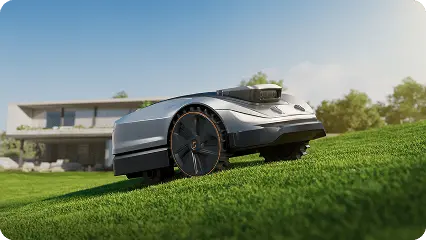
For hilly yards, the best robot mowers combine slope rating, traction, and navigation. AWD systems with deep-tread tires maintain grip on steep or wet terrain, while RTK or Vision AI navigation ensures consistent coverage and avoids obstacles. Proper slope matching, battery capacity, and smart path planning let robotic mowers handle inclines safely and efficiently.
Mowing a hilly yard is one of those tasks that gets harder every season. The gradient that felt manageable a few years ago now takes more effort, more time, and more risk. The best robot mower for hills should handle that work without any of the physical strain, but not every robotic mower is built for slopes. Some lose traction on wet grass. Others get confused by terrain changes and miss patches. And a few simply aren't rated for anything steeper than a gentle incline.
This guide breaks down what actually matters for hill performance, and covers five models worth considering in 2026, including options at different price points and slope ratings.
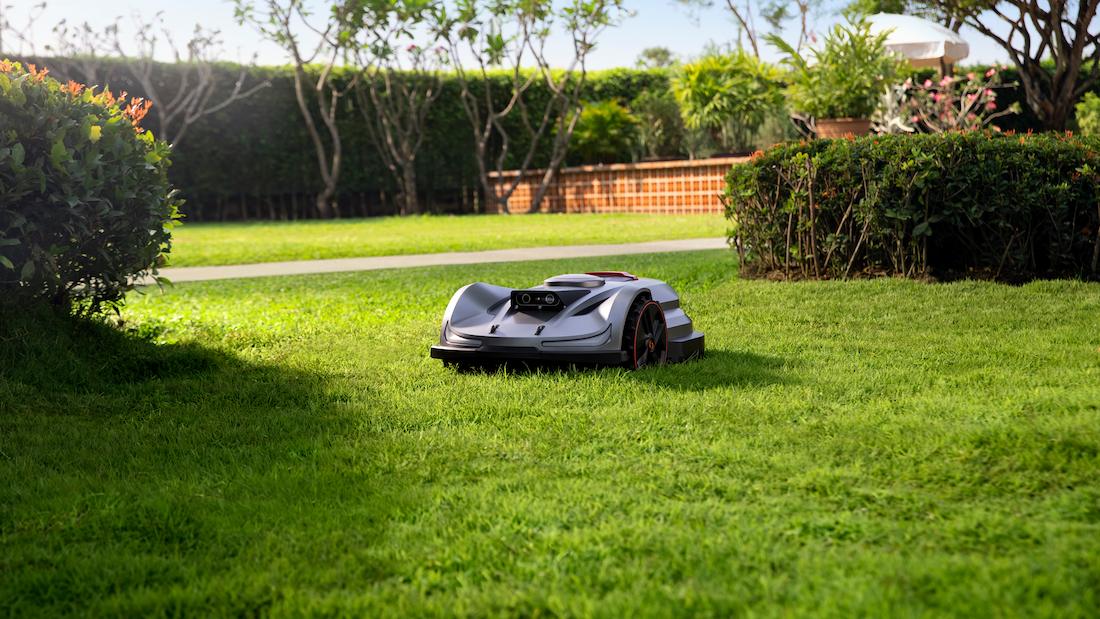
The best robotic lawn mower for hills removes the person from the equation entirely, and the benefits go beyond just saving effort:
Choosing a robot mower for sloped terrain requires attention to traction, battery life, and incline rating to ensure reliable performance. Consider these key factors before making a decision.
The most important number on the spec sheet. Slope capability is usually listed as a percentage or degree, 70% and 35° refer to the same incline. Most standard robot mowers handle 20–25 degrees at most. For genuinely steep terrain, look for models rated at 30 degrees or above. Anything approaching 40 degrees or higher puts you into specialized territory.
A high slope rating only matters if the mower can actually maintain grip. All-wheel drive systems distribute power to every wheel independently, which makes a significant difference on steep or wet grass compared to rear-wheel-drive models. Tire design matters too. Deep-tread or off-road-style tires grip more reliably than smooth wheels on uneven ground. Some models also include independent front suspension, which keeps the cutting deck level as the chassis tilts with the terrain.
Hill climbing draws more power than flat mowing. A mower that covers 1000 m² on flat ground may cover considerably less on a hilly property. Check runtime claims carefully and, where possible, look for reviews that test performance on slopes rather than flat test conditions.
On sloped terrain, navigation precision matters more than it does on flat yards. A mower that drifts even slightly on a steep hill can miss strips, double-cover areas, or cross into garden beds. RTK-GNSS navigation provides centimeter-level positioning accuracy that holds up on hills. Vision AI systems add another layer by detecting obstacles and adjusting routes in real time. Wire-free mapping is also a practical advantage, laying boundary wire on a steep bank is genuinely difficult.
Hills stay wet longer than flat areas. Dew, drainage, and slope runoff mean a hillside lawn can be damp well into the morning even on dry days. A mower with solid water resistance, IPX5 or IPX6 rating, will handle this without issues. Some models also include rain sensors that automatically return the mower to its dock when precipitation starts.
Not every robot mower can handle a slope, but these five models can. Whether your yard has gentle rolling terrain or genuinely steep grades, here's what's worth considering this year.
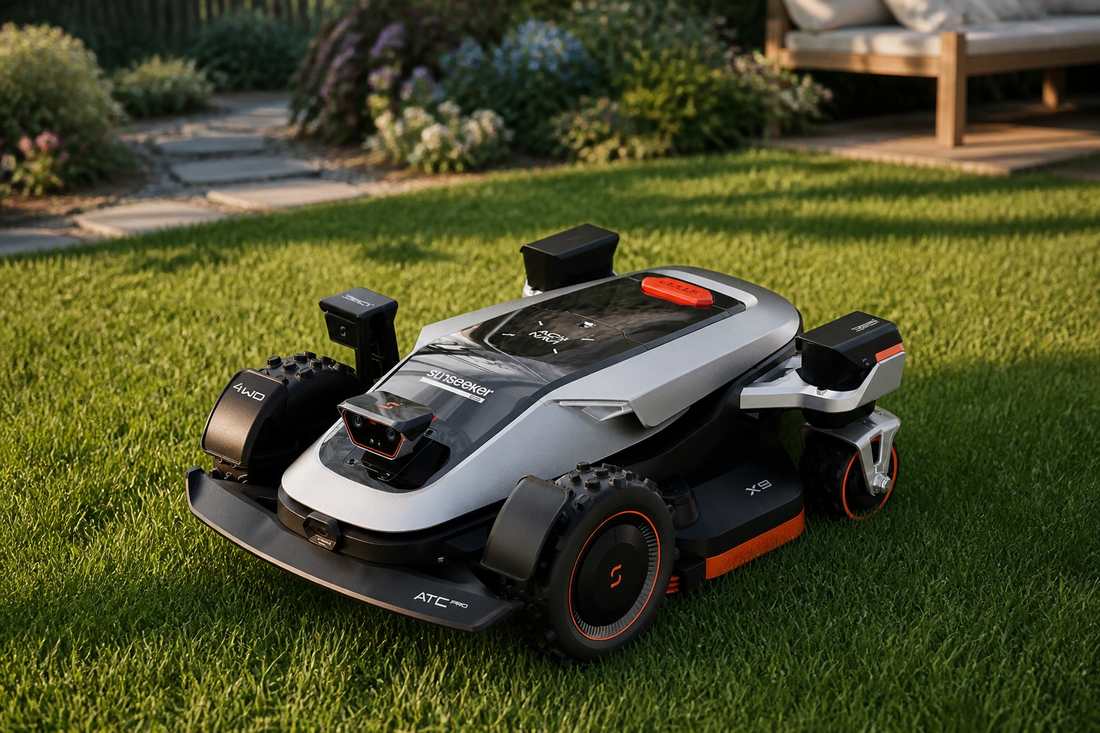
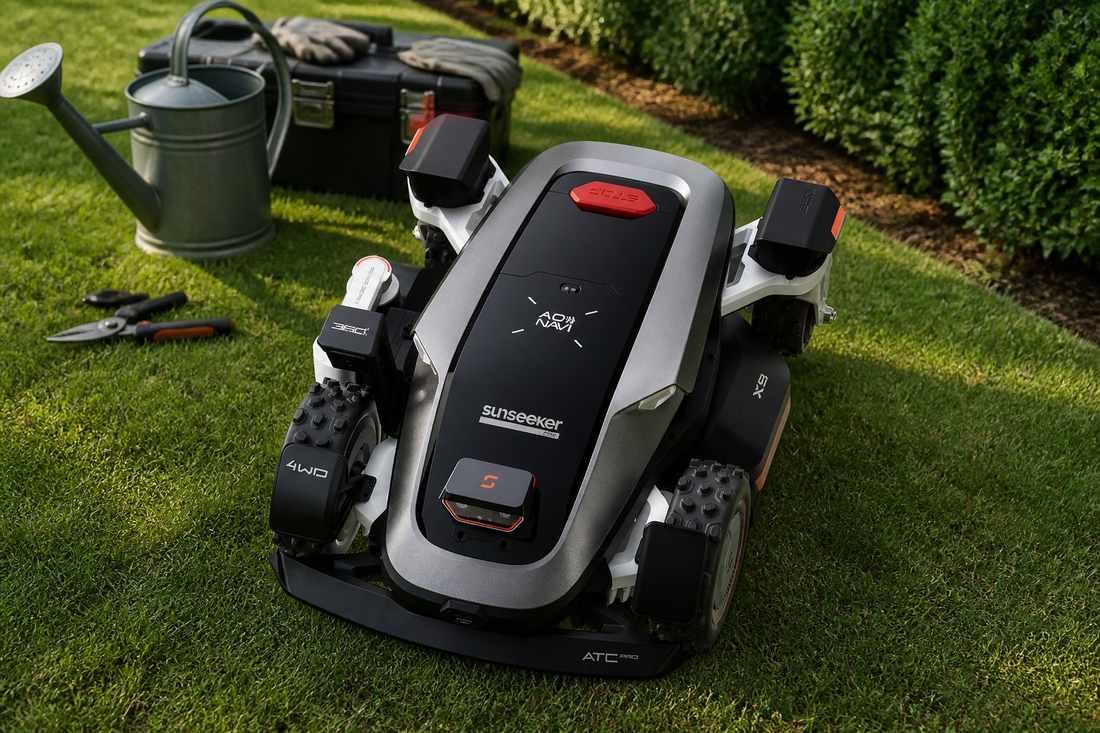
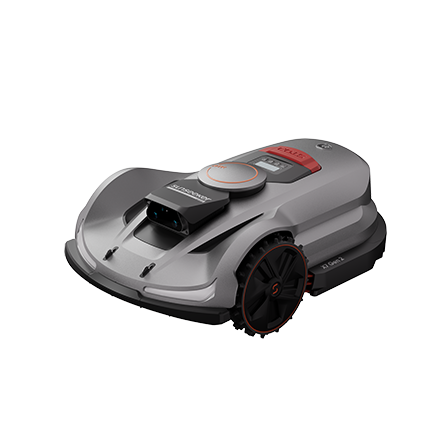
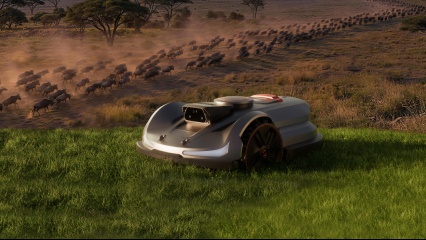
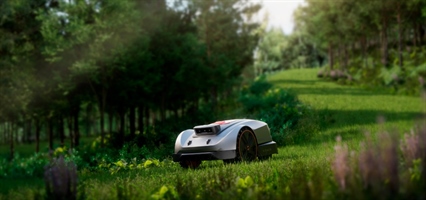
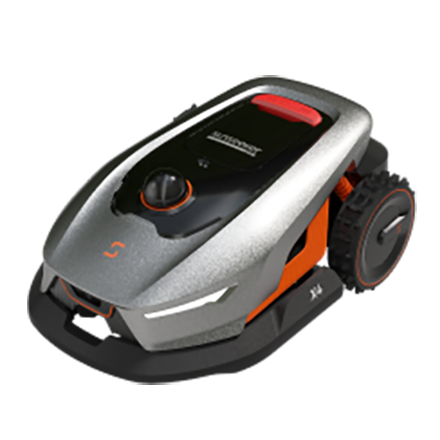
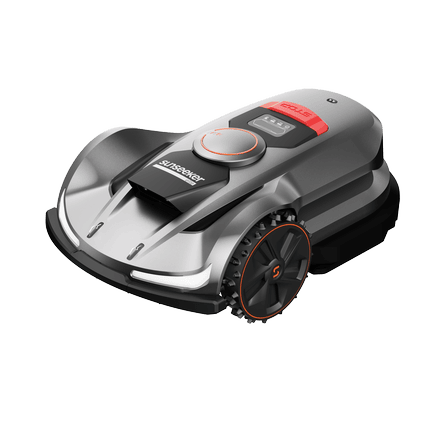
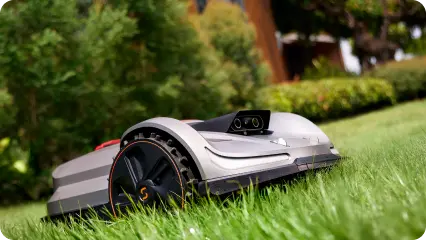
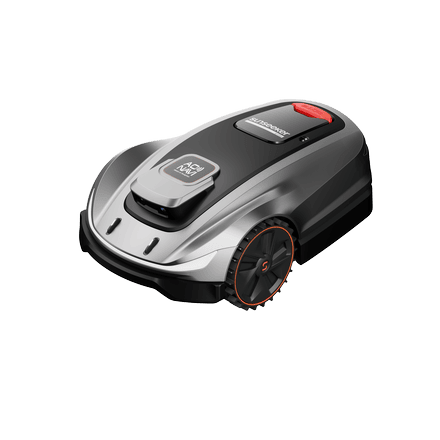
The Sunseeker Elite X7 Series is built specifically for yards where most robot mowers struggle. Its all-wheel drive system and rugged off-road tires handle slopes up to 35 degrees, and the floating dual-disc cutting system keeps blade height consistent even as the terrain shifts beneath it. AONavi navigation combines RTK satellite positioning with VSLAM visual technology to maintain centimeter-level accuracy without boundary wires. At around 60 dB, it's quiet enough for regular use without disturbing neighbors.
Best for: Homeowners with large, hilly lawns who want a capable wire-free setup with AI navigation.
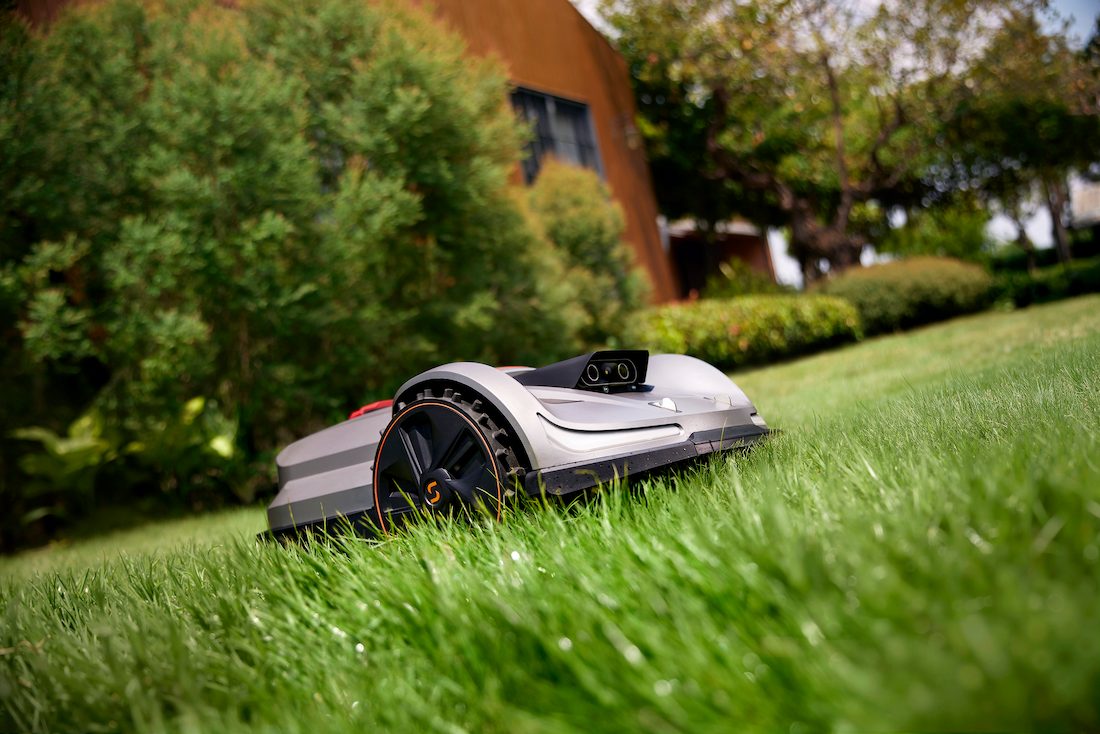
The Mammotion LUBA 2 AWD handles slopes up to 38.6 degrees with all-wheel drive and wire-free RTK navigation. It covers up to 2.5 acres depending on the model and supports up to 100 mowing zones. A solid option for best robotic lawn mower for uneven ground if steep slope rating is your top priority.
Best for: Yards with steep terrain where maximum slope rating is the deciding factor.
The Husqvarna Automower 535 AWD is a professional-grade option with AWD traction and GPS-assisted navigation. It handles slopes up to 35 degrees and is designed for commercial use with Fleet Services management for multi-unit deployments. Better suited to managed commercial properties than typical residential setups.
Best for: Commercial properties and large estates needing professional-grade reliability.
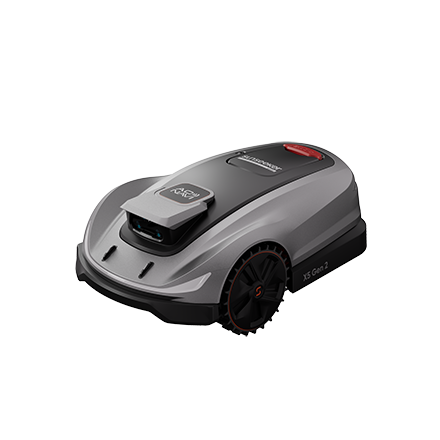
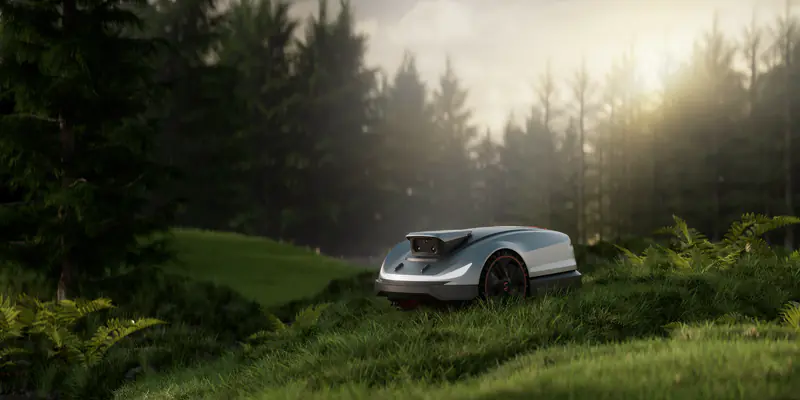
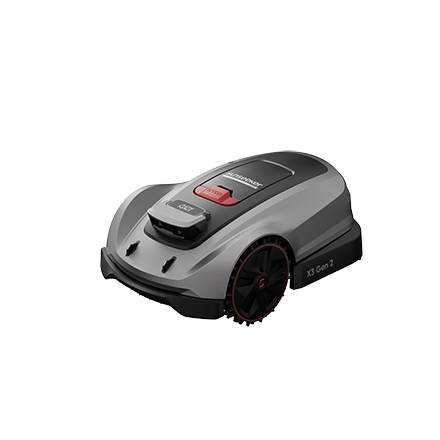
The Sunseeker Elite X5 Gen 2 brings a meaningful upgrade in both navigation and terrain handling. VSLAM 2.0 paired with RTK maintains stable positioning even under tree cover or near buildings, and Vision AI 2.0 adds day and night obstacle detection so mowing can continue on schedule regardless of light conditions. The tri-wheel AWD system drives each wheel independently for better control on slopes and wet grass, while the 10 TOPS AI chip significantly improves real-time path planning and obstacle response.
Best for: Mid-to-large yards with moderate slopes and complex layouts requiring reliable day and night operation.
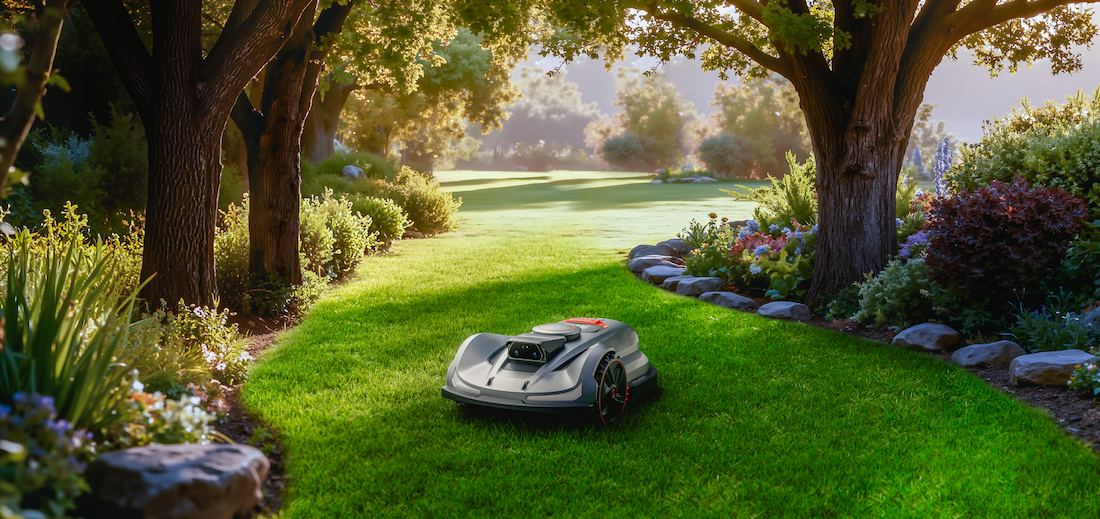
The Mammotion Luba Mini AWD offers the same 80% slope rating as the larger LUBA 2 in a more compact package, suited to smaller properties or secondary lawn areas with demanding terrain.
Best for: Small hilly yards that need serious slope capability without a full-size mower.
Finding the best robot mower for hills comes down to matching slope ability, coverage, and navigation to your yard. Steeper lawns need stronger traction and better control, while smaller or more complex spaces benefit from precise, flexible movement. Looking closely at slope ratings, drive systems, and navigation helps avoid problems later.
In the end, the goal is simple: a mower that can handle your terrain with less effort on your side. For homeowners ready to simplify lawn care and handle slopes more easily, Sunseeker is worth exploring for its strong slope performance, smart navigation, and more hands-off mowing experience.
Yes, modern robotic mowers handle hills well when spec'd for the terrain. Standard models typically manage 20–25 degrees, while AWD models with RTK navigation can handle 35 degrees and above. The key is matching the mower's slope rating to your actual terrain, accounting for wet conditions where traction is reduced.
The maximum slope varies significantly by model. Standard consumer mowers typically top out around 20–25 degrees. Mid-range AWD models handle 25–30 degrees. The highest-rated consumer models are rated for 35 degrees. The best robot mower for rough terrain in commercial categories can push higher still.
Not with modern wire-free models. RTK-GNSS navigation creates virtual boundaries accurate to within a few centimeters, removing the need to physically lay and bury wire, a task that's particularly difficult on steep or uneven ground. Wire-free models like the Sunseeker Elite X7 Series and Sunseeker Elite X5 Gen 2 map your lawn through a guided boundary pass, then use satellite and visual navigation to stay within those virtual limits.