




Buyer's Guide
6/18/2026
Contents
Products
Residential Lawns





Commercial Landscapes
Explore
Where to Buy


Gas lawn mowers remain the go-to choice for larger yards, demanding terrain, and homeowners who want raw cutting power without worrying about battery runtime. The trade-off is maintenance: oil changes, spark plugs, and seasonal tune-ups are part of ownership. Matching engine size and deck width to yard size does most of the work when comparing models.
Gas-powered mowers still dominate when raw power and extended runtime matter most, but choosing the right one takes more than picking the biggest engine. A best gas lawn mower for your yard depends on yard size, terrain, and how much maintenance you're comfortable taking on. This guide covers the top six picks across every major use case, plus what features are worth paying attention to before buying.
A few specs have more impact on day-to-day usability than anything else on the label.
These six models cover the full range of residential gas mowing needs. Here's how they break down by use case.
A 150cc Briggs & Stratton engine, 53 cm deck, front-wheel self-propelled drive, and 3-in-1 cutting make this one of the most recommended best gas mower options in its price range. Six cutting height positions from 3–9.5 cm. Reliable, easy to assemble, and well-suited for yards up to 3,000 m².
The gold standard for residential self-propelled performance. The Select Drive® system adjusts mowing speed to your pace without levers, the rust-proof NeXite® deck carries a lifetime warranty, and the 4-in-1 Versamow System™ handles mulching, bagging, discharge, and leaf shredding without tools. Seven cutting heights from 2–10 cm and a 5-year residential warranty round out the most capable best gas powered lawn mower in its class.
A straightforward push mower for flat yards that don't need self-propulsion. The 140cc Briggs & Stratton ReadyStart® engine starts with a single pull, no priming or choke required. The 53 cm TriAction® deck mulches, bags, or side-discharges. Best for yards up to 1,000 m².
A 22 HP V-Twin engine and a 107 cm Edge™ cutting deck cover up to 8,000 m² per tank. Hydrostatic transmission means smooth speed control with no gear shifting. The Easy Change™ 30-second oil system takes the hassle out of the most common maintenance task. A gas lawn mower best suited for homeowners who need efficiency and comfort on large properties.
A 144cc engine and 53 cm deck handle small yards up to 1,000 m² without the added weight or cost of self-propulsion. Six cutting height positions from 4–10 cm and a 15.8-gallon bag capacity mean fewer stops during a mowing session.
The most affordable pick on this list. A 125cc engine powers a 51-cm steel deck with side discharge and three height positions from 3–10 cm. No frills, reliable performance for flat yards under 1,000 m².
|
Model |
Engine |
Cutting Width |
Drive |
Best For |
|
Craftsman M220 |
150cc |
53 cm |
Self-propelled FWD |
Best overall value |
|
Honda HRX217VKA |
GCV200 |
53 cm |
Self-propelled variable |
Premium performance |
|
Troy-Bilt TB120 |
140cc |
53 cm |
Push only |
Flat yards, no frills |
|
John Deere S130 |
22 HP V-Twin |
107 cm |
Riding hydrostatic |
Large yards 4000+ m² |
|
PowerSmart DB8621P |
144cc |
53 cm |
Push only |
Small yards, mid budget |
|
Yard Machines 02B |
125cc |
51 cm |
Push only |
Budget, small flat yards |
Neither type is universally better. The right choice depends on yard size, grass conditions, and maintenance tolerance.
Where gas wins. Gas mowers provide consistent power regardless of charge level, handle thick or overgrown grass without power drop, and suit properties over 2,000 m² where extended runtime matters.
Where electric wins. Battery mowers start instantly, require no fuel, skip seasonal maintenance, and run significantly quieter at 65–75 dB(A) vs. 85–95 dB(A) for gas. For well-maintained lawns under 2,000 m², modern 40V to 80V models match gas performance closely.
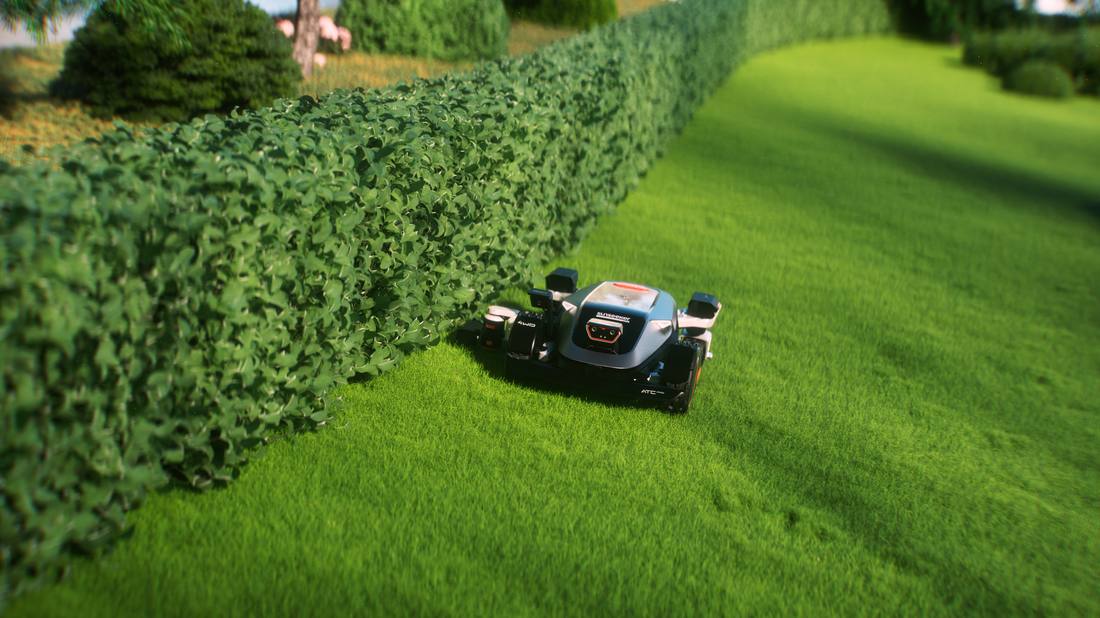
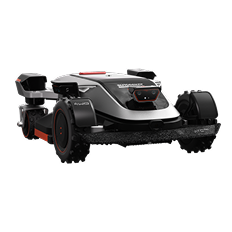
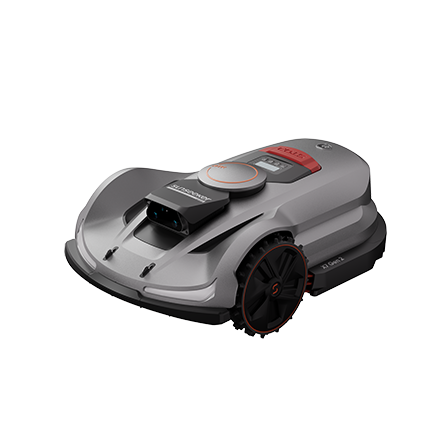
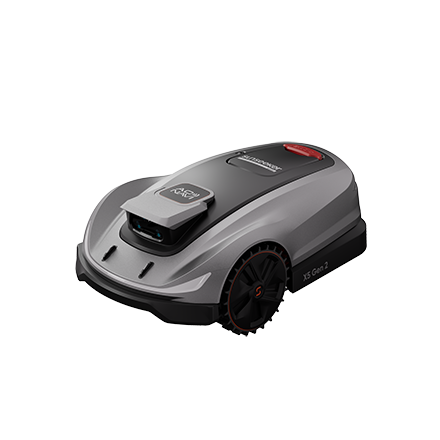
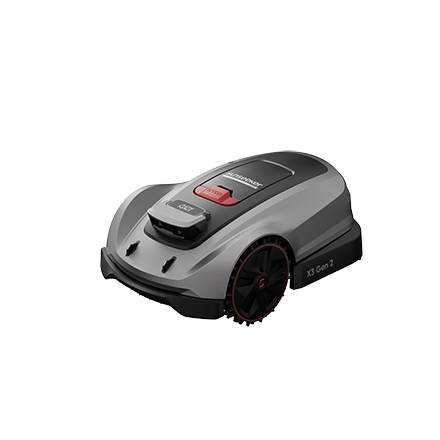
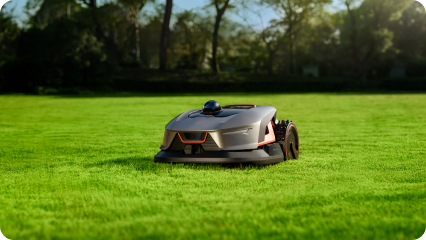
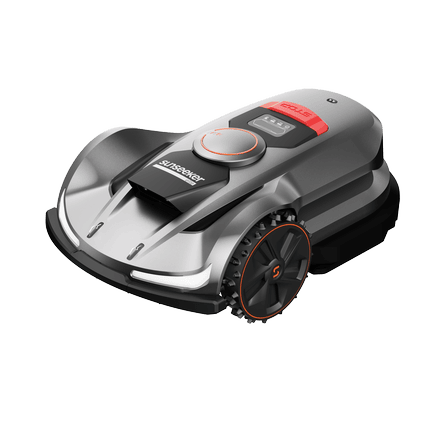
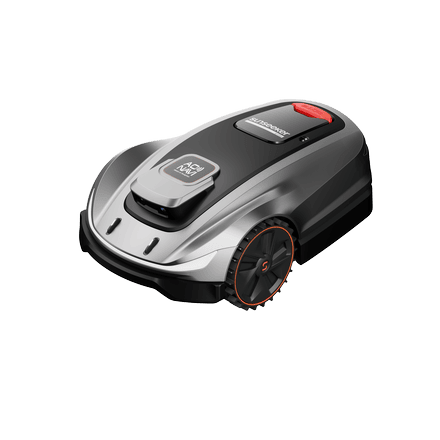
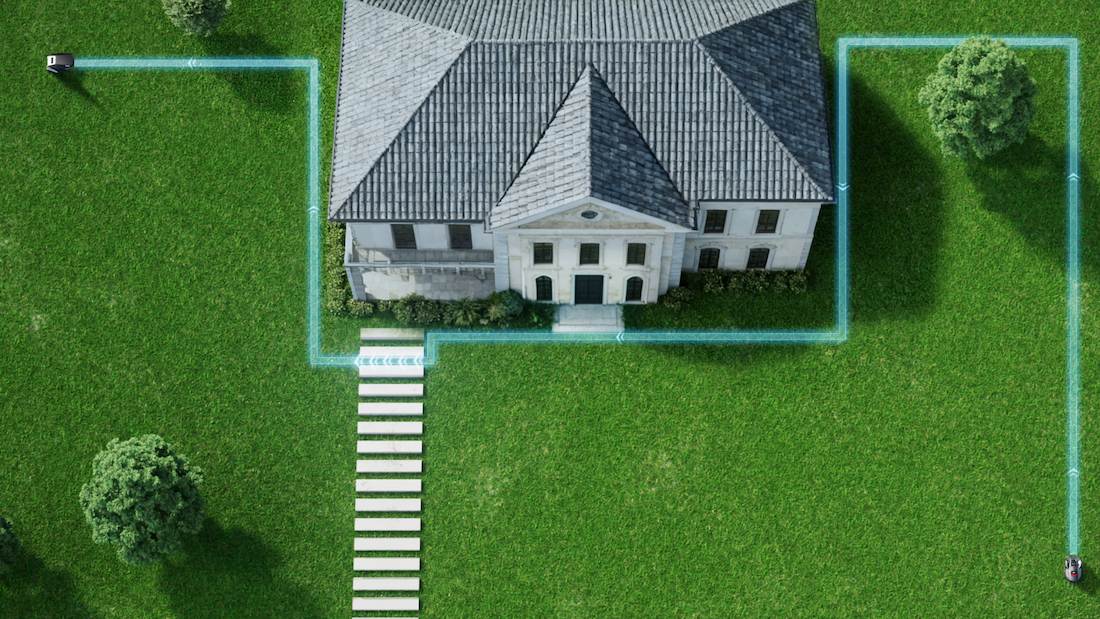
Robotic mowers as an alternative. For homeowners who want to eliminate mowing effort entirely, robotic mowers operate autonomously on a set schedule. The Sunseeker Elite X5 covers up to 2,000 m² without any boundary wires. Just place it on the lawn and it maps the space automatically. Obstacle detection keeps it from running into furniture, toys, or garden edges, and app-based scheduling means it starts and finishes on its own without any manual input. At 63 dB(A), it's quiet enough to run while you're home without being disruptive.
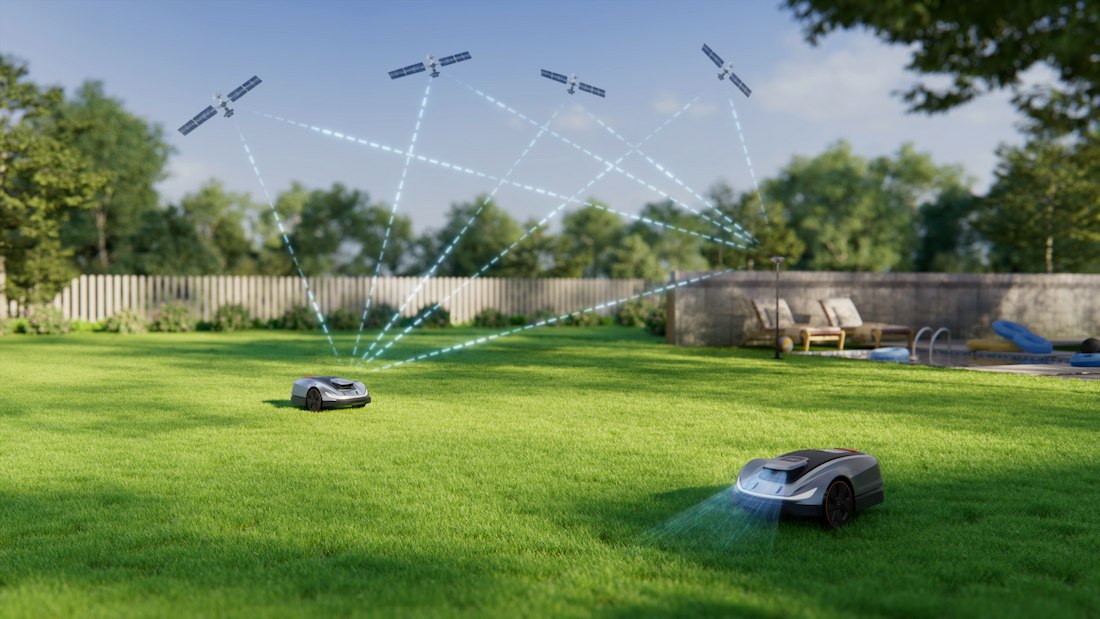
Gas mowers are durable when maintained correctly. A basic annual routine covers most of what's needed.
1. Change the oil once a season. Fresh oil prevents engine wear. Most walk-behind gas mowers take SAE 30 or 10W-30. Check the owner's manual for the correct grade and capacity.
2. Replace the spark plug annually. A fresh plug ensures reliable starting and clean combustion. It's a five-minute job and costs under €4. Skipping it is one of the most common reasons mowers become hard to start after winter storage.
3. Clean or replace the air filter. A clogged air filter reduces power and increases fuel consumption. Paper filters can be tapped clean; foam filters can be washed. Replace if visibly damaged or heavily clogged.
4. Sharpen or replace the blade each season. A dull blade tears grass rather than cutting it, leaving ragged brown tips that increase disease risk. Blade sharpening can be done at home or taken to a small engine shop.
5. Drain or stabilize fuel before storage. Gasoline degrades over winter and leaves deposits that clog carburetors. Either run the mower dry or add a fuel stabilizer before storing.
Gas maintenance adds up over a season. For homeowners who prefer to skip it entirely, a robot lawn mower runs on battery power with no oil changes, no spark plugs, and no seasonal tune-ups. Just blade replacement once or twice a year and the occasional cleaning.
The right best gas mower comes down to yard size, terrain, and how much maintenance you're willing to take on. Push mowers suit small, flat yards with minimal effort. Self-propelled models reduce fatigue on larger or hillier properties. Riding mowers make sense once the area grows beyond what walk-behind mowing can handle comfortably. Gas still leads on raw power and runtime flexibility, but that advantage comes with a maintenance commitment worth factoring into the decision.
Reel mowers give the cleanest scissor-like cut on fine, well-maintained turf. For most grass types and conditions, self-propelled gas mowers with twin-blade systems come closest to a professional finish. The right answer depends more on grass type and mowing frequency than the mower itself.
Late summer through fall, typically August to October, is when retailers discount current-year inventory ahead of new model arrivals. Spring offers the widest selection but usually at full price due to seasonal demand.
Most professional landscapers use commercial-grade zero-turn riding mowers for open areas and heavy-duty walk-behind mowers for detail work. Zero-turns from Scag, Exmark, and Hustler are common on commercial crews. For homeowners who want the closest residential equivalent, a premium self-propelled walk-behind like the Honda HRX series delivers professional-level cut quality without the commercial price tag.