







FAQs
5/28/2026
Contents
Products
Residential Lawns



Commercial Landscapes
Explore
Where to Buy


Today's battery lawn mowers are genuinely capable machines. Across every category, robotic, push, self-propelled, riding, and zero-turn, there are models that handle real yards well. The question isn't whether battery power works anymore. It's about finding the right type and voltage for your specific situation.
Battery mowers have become popular for good reason. Many modern models can handle small and medium gardens, and some are built for larger lawns too. They run quietly, produce no direct exhaust fumes, and usually need much less maintenance than petrol mowers.
But with so many types and brands on the market, it helps to know what you're looking for before you buy. These battery lawn mower reviews cover the top picks across five mower types, from compact push models to fully autonomous robotic mowers, so you can find the one that fits your yard and your routine.
For most homeowners, battery mowers solve real day-to-day problems that gas models create. Whether you're reading your first electric lawn mower reviews or comparing several options, these are the reasons most people make the switch:
When reading battery powered push mower reviews, focus on whether each mower’s type and specifications match your lawn’s actual needs. Here are the key factors to check:
1. Mower type.Push mowers suit smaller, flat yards. Self-propelled models handle slopes and larger lots more comfortably. Robotic mowers handle the job for you on a set schedule. Riding and zero-turn mowers cover large properties efficiently.
2. Higher voltage generally means more power and longer runtime. 40V handles yards up to about 1,012 m². 56V to 60V covers up to 2,024 m². For larger yards or riding mowers, 80V or dual-battery systems are standard.
3. Battery capacity (Ah).A higher Ah rating means longer runtime between charges. For walk-behind mowers, 4.0Ah to 7.5Ah covers most situations. Riding mowers typically use multiple high-capacity batteries.
4. Cutting width.A wider deck covers more ground per pass. 533 mm to 560 mm suits most suburban yards. Riding mowers typically start at 762 mm and go up from there.
5. Grass handling.Look for mulching, bagging, and side discharge options. Having all three gives you flexibility across seasons and conditions.
6. Most walk-behind battery mowers offer 45 to 70 minutes per charge. Robotic mowers handle their own charging automatically. Check that the rated runtime matches your yard size.
7. Most reputable brands offer 3 to 5 years on the tool and 3 years on the battery. Longer battery warranties are worth noting since the battery is the most expensive component to replace.
One thing to keep in mind: very large properties over 6,070 m² may need multiple batteries or a riding model. And higher-voltage models do cost more upfront. For most residential yards though, a battery mower is a solid long-term choice.
The picks below cover five categories based on yard size, terrain, and how hands-on you want your mowing experience to be. Each one is based on real-world performance, customer feedback, and verified specs.
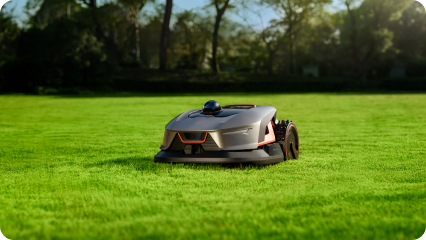
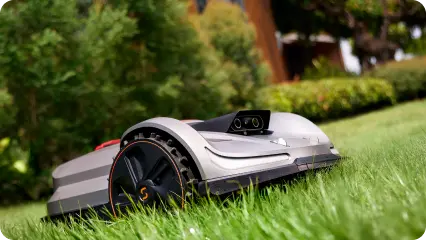
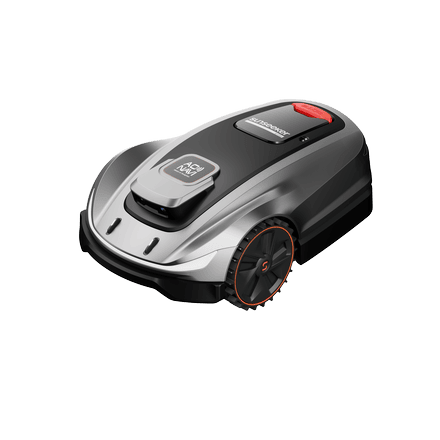
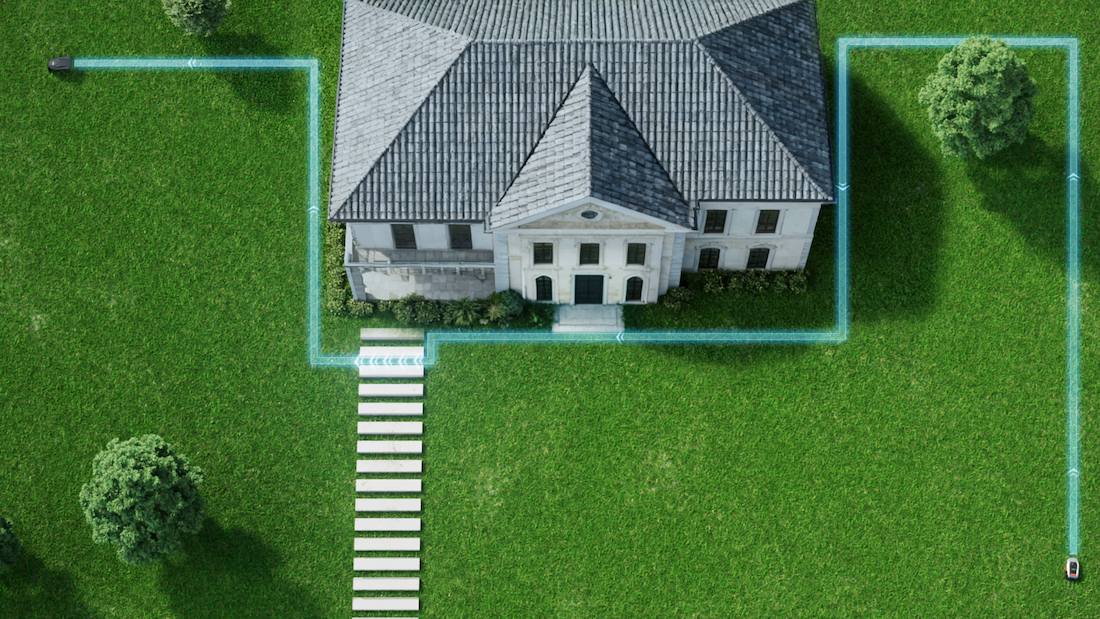
No mowing schedule, no pushing, no effort. Robotic mowers map your yard, mow on a set schedule, and return to the dock to recharge on their own. For homeowners who want the lawn handled without being involved, they're the most practical option available.
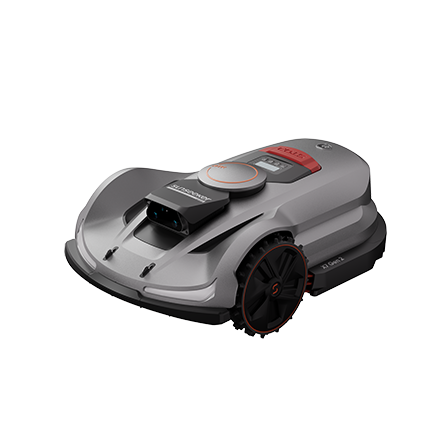
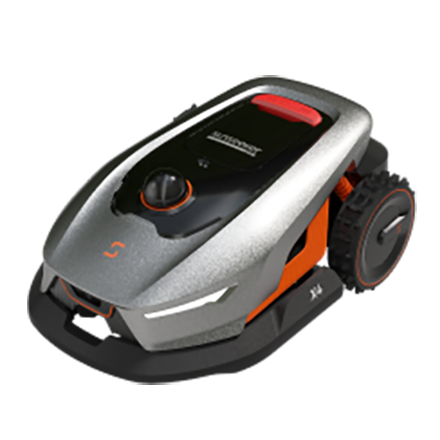
Precision navigation is what sets the Sunseeker Elite X4 apart. It uses LidarAI™ 3D fusion sensing with a 360° 3D LiDAR system that captures over 210,000 point clouds per second, building one of the most accurate real-time maps of any robotic mower on the market. The 10 TOPS AI chip handles obstacle detection and path planning in real time, and L-SLAM technology keeps navigation accurate even where GPS signal is inconsistent. For yards with complex layouts, narrow passages, or lots of obstacles, the X4's spatial awareness translates directly into cleaner, more complete mowing coverage. Drop it on your lawn, connect it to the app, and it figures out the rest.
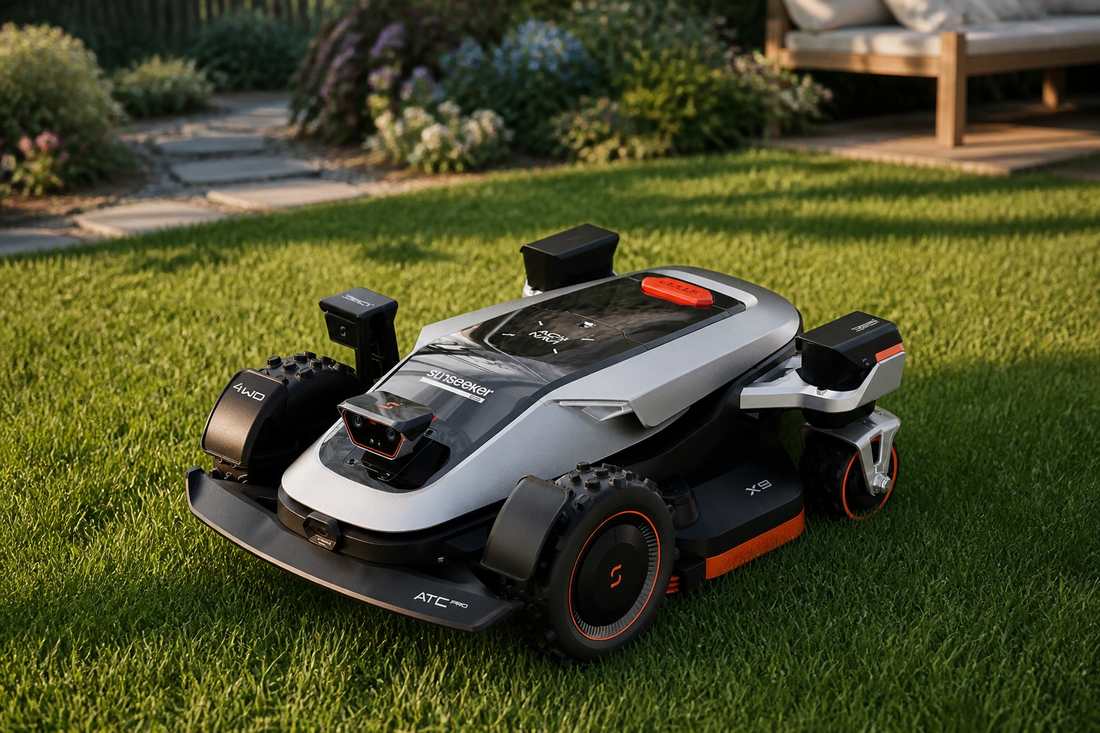
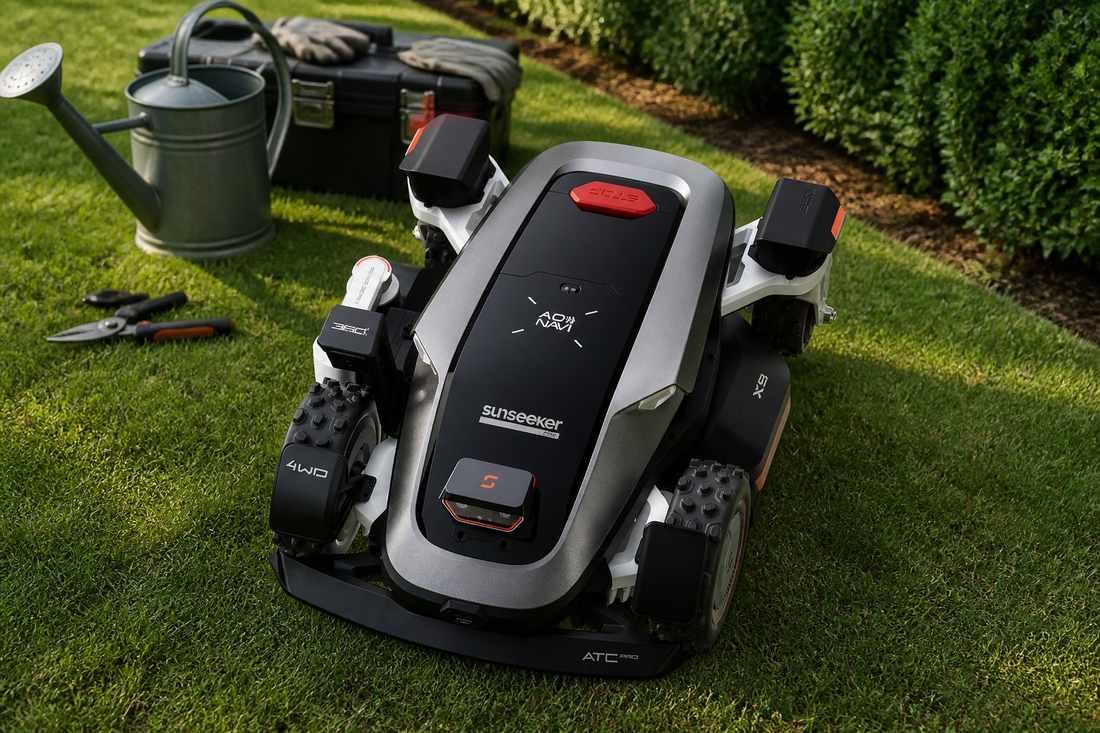
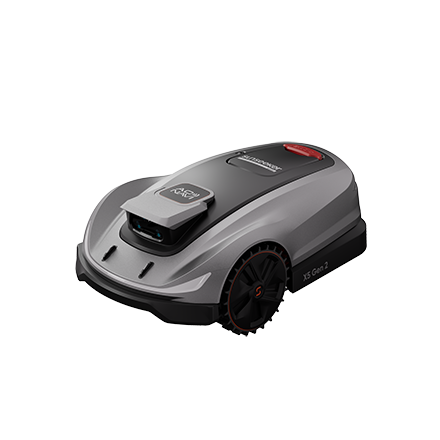
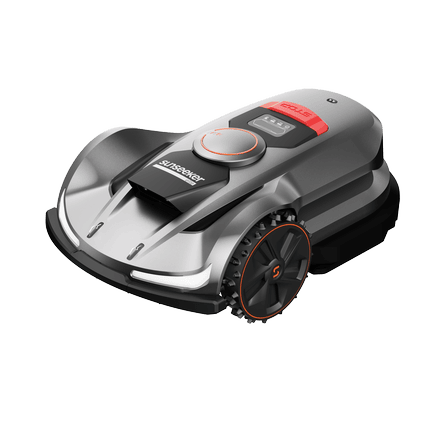
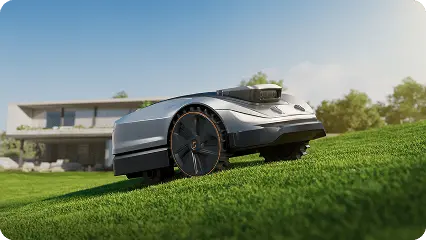
For a large lawn, the Sunseeker Elite X7 Plus Gen 2 is worth considering. It's a robotic mower that covers yards up to 6,000 m² on its own schedule. AONavi™ 2.0 combines Network RTK and VSLAM 2.0 with a standard 4G-GPS module. No local base station needed. The tri-wheel AWD system handles slopes up to 70% (35°), making it one of the few robotic mowers that manages genuinely challenging terrain. Vision AI 2.0 handles obstacle detection day and night. For large yards where the goal is simply getting the mowing done without effort, it's a strong option.

Push mowers are the most straightforward option for everyday lawn care. No drive system to maintain, no extra weight, and easy to maneuver around garden beds and tight corners. For flat or gently sloping yards up to about 2,024 m², they handle the job well without overcomplicating things.
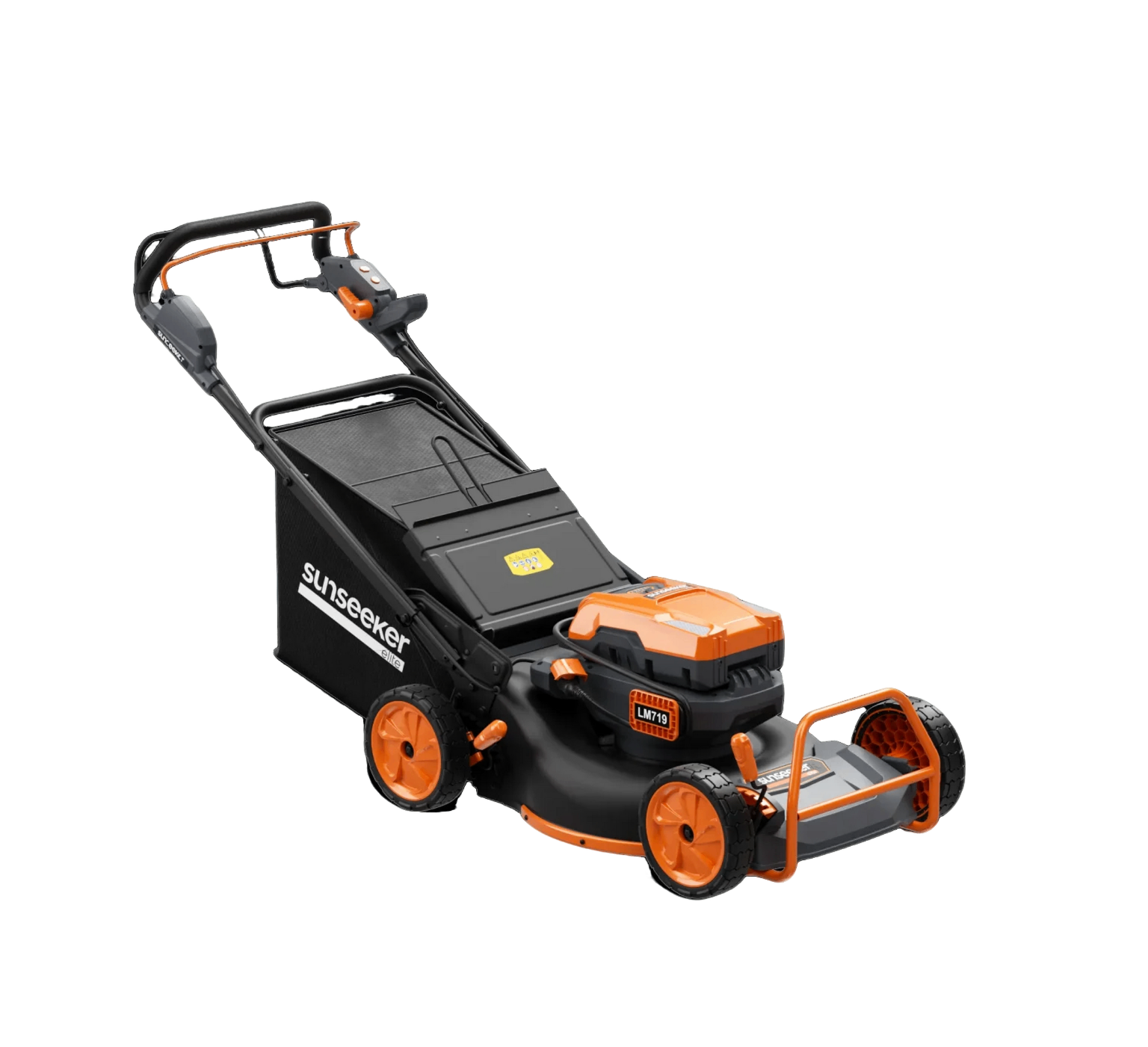
The Sunseeker Elite Lawn Mower (Plug-in Connect) stands out in this category. Its 560 mm dual-blade steel deck cuts more evenly than the single-blade designs on most competitors at this size, reducing missed strips on uneven ground. The 60V system pairs with 7 cutting height settings from 2.5 cm to 9 cm, and the 3-in-1 functionality covers mulching, rear discharge, and bagging. Noise stays at or below 98 dB(A). No carburetor, no oil changes, no fuel lines. Maintenance stays minimal.
Self-propelled mowers are the go-to for yards over 1,012 m² or terrain with noticeable slopes. The drive system does the pushing for you, which takes a lot of the effort out of longer mowing sessions.
The Milwaukee M18 FUEL 21 in Self-Propelled Mower is one of the more powerful battery operated lawn mower reviews picks in this category. Built on the M18 platform with two 12.0Ah High Output batteries, it delivers 10.0 ft-lbs of torque, enough to handle dense grass and challenging conditions. The 533 mm steel deck covers up to a third to 1,350 m² to 2,024 m² per charge depending on conditions. The variable-speed self-propel system and thumb bar speed control let you adjust pace on the fly, and the commercial-grade build makes it a strong choice for homeowners who push their equipment hard.
For yards over 2,024 m² where walking is impractical, a battery riding mower covers ground efficiently without the noise and emissions of a gas model. Most battery operated mower reviews in this category point to a few standout brands.
The Ryobi 80V 30 in Rear Engine Riding Mower suits yards between 2,024 m² to 4,047 m². The 762 mm cutting deck is narrower than full-size lawn tractors, which makes it easier to store and navigate in tighter areas. The 80V battery system provides consistent power for moderate grass conditions, and the rear-engine layout gives it a more compact footprint than front-engine alternatives. It's a good entry point for homeowners moving up from a push mower to a rider.
Zero-turn mowers handle large, open properties fastest. Their independent rear-wheel control lets them make tight turns around trees, garden beds, and obstacles without backtracking.
The Greenworks 60V 42 in Zero-Turn Riding Mower is designed for larger residential properties. The 1,067 mm cutting deck covers ground quickly, and the dual 60V battery system provides enough runtime to handle most large suburban yards in a single charge. The zero-turn steering system makes it significantly more maneuverable than a traditional lawn tractor, and it operates with the quiet, low-maintenance characteristics common to all battery-powered models. For homeowners with open lots over 4,047 m², it's one of the more accessible battery powered mower reviews options in this class.
Battery lawn mower reviews consistently show that electric mowers have become the practical choice for most homeowners, not just the eco-conscious one. They start reliably, need less maintenance, and run quietly enough that you won't bother the neighbors.
The right pick depends on your yard. For a small lot with no slopes, a push mower is enough. For larger properties or hillier terrain, step up to self-propelled. If you'd rather not mow at all, a robotic mower handles it on a schedule. And for larger acreage, riding and zero-turn models now match gas performance without the upkeep.
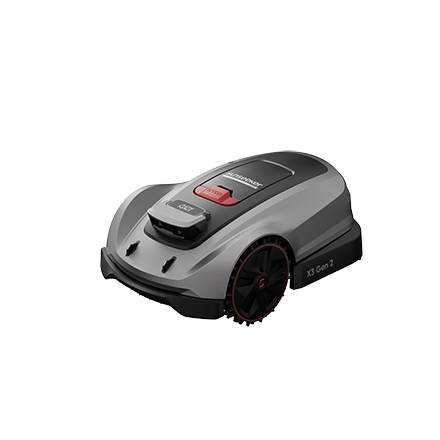
There's no single answer since the best battery powered lawn mower pick depends on yard size and type. For push mowing, the Sunseeker Elite Lawn Mower (Plug-in Connect) is consistently strong. For robotic mowing, the Sunseeker Elite X4 and X Gen 2 Series offer some of the most advanced navigation systems available. The best model is the one that matches your yard size, terrain, and how often you mow.
For most homeowners, yes. Any honest battery powered lawn mower review or electric lawn mower review will tell you the savings on fuel and maintenance over time often offset the higher upfront cost. Battery mowers also start instantly, run quietly, and require no oil changes, spark plugs, or carburetor maintenance. For yards under 2,024 m², a quality 60V model handles the job as well as most gas mowers. The main consideration is runtime. Larger yards may need a higher-capacity battery or a second battery to finish in one session.
Yes, and today's higher-voltage models do it well. A 40V mower may slow down in dense or overgrown grass, but a 56V or 60V model with a brushless motor handles most residential conditions without dropping off. The Sunseeker Elite Lawn Mower (Plug-in Connect) is a good example, its dual-blade design cuts through grass more efficiently than a single-blade setup, reducing the chance of the motor bogging down in thicker patches. For consistently thick grass, raising the cutting height slightly on the first pass and then going lower on a second pass helps any battery mower work more efficiently.