








The good news is that small urine spots are often repairable. The key is knowing what can be diluted, what cannot be reversed, and when a patch needs reseeding. The sections below keep the process practical, with simple steps for fresh accidents, older burn marks, and prevention habits that protect the lawn without making life harder for your dog.

Why Does Dog Urine Damage Grass?
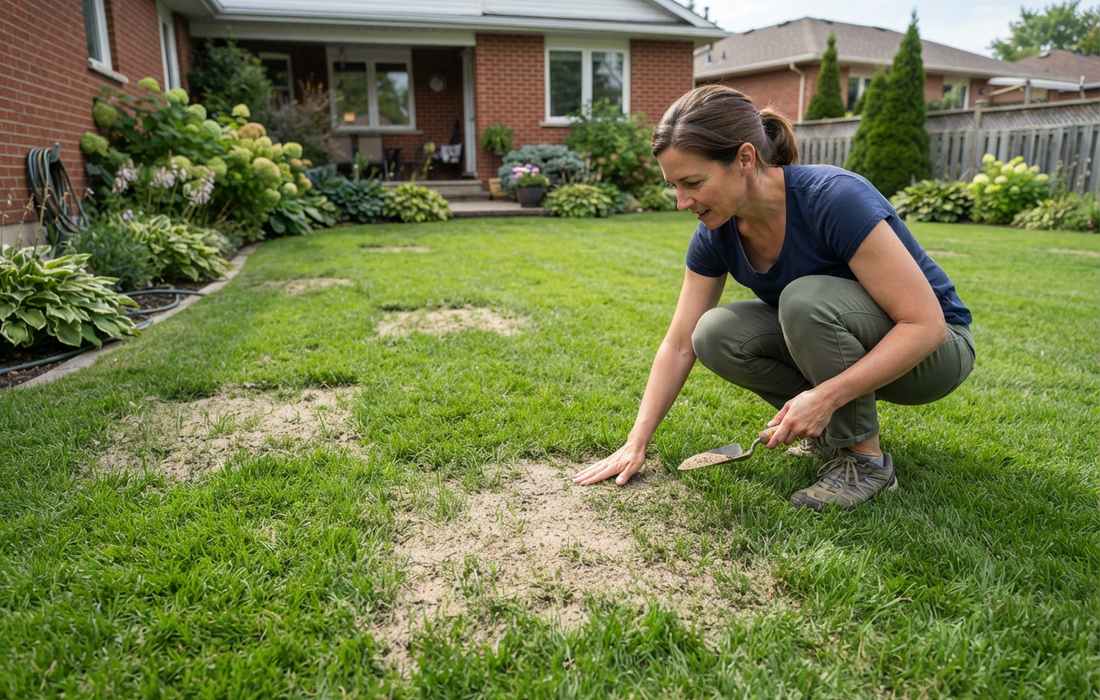
Dog urine damages grass mostly because it contains concentrated nitrogen salts. Nitrogen is part of many lawn fertilizers, but too much in one small spot can burn leaf blades and roots. That is why a urine mark often has a brown or straw-colored center with a darker green ring around it. The outer ring receives a lighter nitrogen dose, while the center gets overloaded.
The risk is higher when urine is concentrated, the weather is hot, or the lawn is already stressed by drought, compacted soil, close mowing, or weak roots. Repeated urination in one area can also build up salts in the soil. Female dogs are often blamed because they tend to empty more urine in one place, but any dog can cause burns if the dose is concentrated enough. The grass type, soil drainage, and watering pattern all affect how severe the mark becomes.
Can You Really Neutralize Dog Urine on Lawn?
You can dilute fresh urine on the lawn, but you cannot truly neutralize it after it has soaked deeply into the soil and burned the grass. Water is the safest first response because it spreads the nitrogen and salts through more soil instead of letting them sit in a tight, damaging patch. Fast dilution works best within the first few hours after the dog urinates.
Be careful with popular home remedies. Baking soda, lime, vinegar, dish soap, and gypsum are often suggested online, but they can change soil chemistry, add extra salts, or irritate grass when used carelessly. They also do not remove the original overload once the tissue has already dried out. For yellow spots that are still alive, deep watering and time may be enough. For dead patches, repair usually means removing the damaged grass and reseeding.
What Should You Do Immediately After Dog Urine Hits Grass?
Fresh urine spots are the easiest to manage because the grass has not fully reacted yet. The goal is to move fast, dilute the urine, and protect the area from extra stress. You do not need a special spray for most fresh accidents.
Rinse the spot with water as soon as possible. Use enough water to soak the top 8 to 15 cm of soil, especially during hot or dry weather.
Avoid mowing the spot immediately after a fresh accident. Grass that has just received a strong nitrogen dose is easier to stress.
Do not add fertilizer to the affected area. Extra nitrogen can turn a mild yellow spot into a dead patch.
Watch the color for the next 7 to 14 days. Pale yellow grass may recover, but crispy brown grass usually needs repair.
Encourage your dog to use a gravel, mulch, or designated potty area if the same lawn section keeps burning.
How to Repair Existing Dog Urine Spots
If the center is brown, brittle, and loose, fixing dog urine spots on the lawn requires removing the dead turf and rebuilding the area with fresh soil and matching seed.
Flush the Area With Water
Start by soaking the damaged patch and a few centimetres beyond its edge. This helps move leftover salts lower into the soil and prepares the area for repair. A slow soak is better than a quick splash. Aim for moisture several centimetres deep, then let the surface drain before raking. If water pools on top, the soil may be compacted, so loosen it gently before adding seed.
Remove Dead Grass
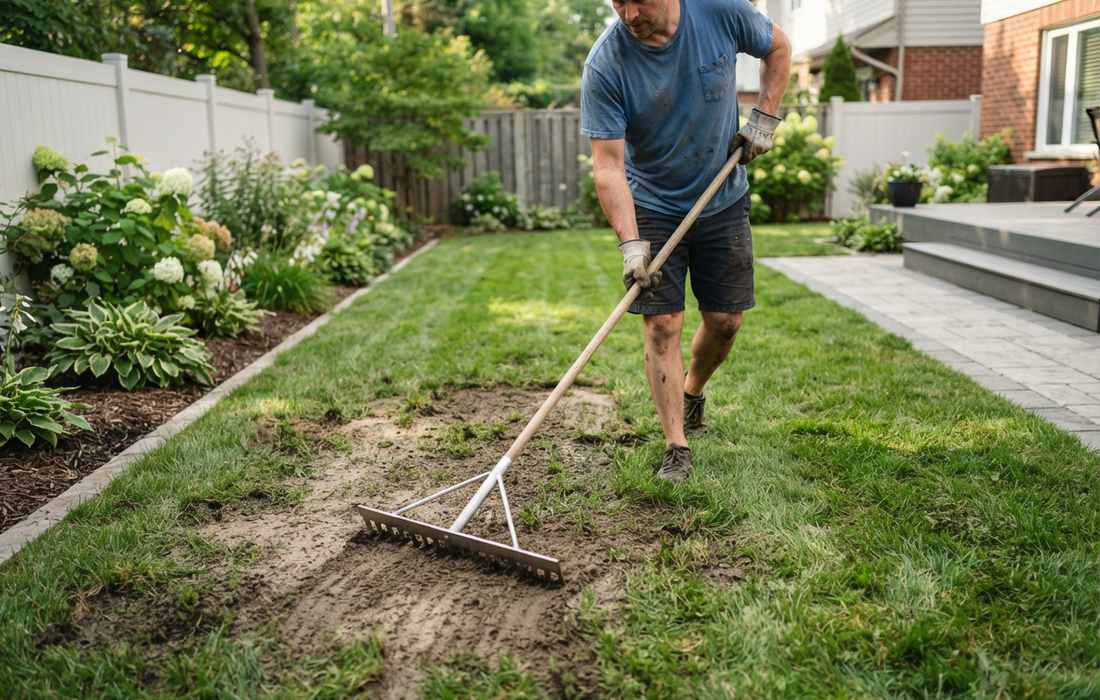
Rake out dead blades, loose roots, and matted debris. The goal is to expose soil, not scrape the patch down into a hole. If the damaged grass pulls up easily, remove it until you reach firm, living turf around the edge. For small spots under 15 cm wide, hand raking is usually enough. Larger patches may need a garden fork or small hand cultivator to break up the top 3 cm of soil.
Add Soil and Reseed Bare Spots
Spread a thin layer of quality topsoil or compost-soil blend over the bare patch, then level it with the surrounding lawn. Use grass seed that matches your existing turf as closely as possible. Press the seed into the soil for good contact, then cover it lightly with no more than 3 to 6 mm of soil or compost. Too much cover can block light and slow germination.
Keep the Patch Moist While It Recovers
New seed needs consistent moisture, not flooding. Water lightly once or twice a day during the first stage if the weather is warm and dry. Once seedlings appear, reduce frequency and water a little deeper so roots move down into the soil. Keep dogs and foot traffic off the repair area until the new grass has been mowed at least two or three times.
How to Prevent New Dog Urine Burns
Prevention works best when it combines dog habits with healthy turf habits. You do not need to change everything at once. Start with the easiest changes, then keep the lawn strong enough to recover after occasional accidents.
Create a potty zone. Train your dog to use a gravel, mulch, or artificial turf area that can be rinsed easily. Reward the habit so it becomes routine.
Rinse high-use spots. If your dog keeps using the same part of the lawn, water that area after bathroom breaks, especially during dry spells.
Keep your dog well hydrated. Fresh water supports normal urine dilution. Do not add supplements or change diet for lawn reasons without asking your veterinarian.
Raise mowing height slightly. Many lawns tolerate stress better at 8 to 10 cm because taller blades shade soil and support deeper roots.
Avoid overfertilizing. Since urine already adds nitrogen, heavy fertilizer use can increase burn risk. Follow product rates and avoid overlapping applications.
Improve soil health. Compacted or dry soil concentrates damage. Aeration, compost topdressing, and steady watering help roots handle stress.
Repair small spots quickly. Early raking and reseeding stop bare patches from widening and inviting weeds.
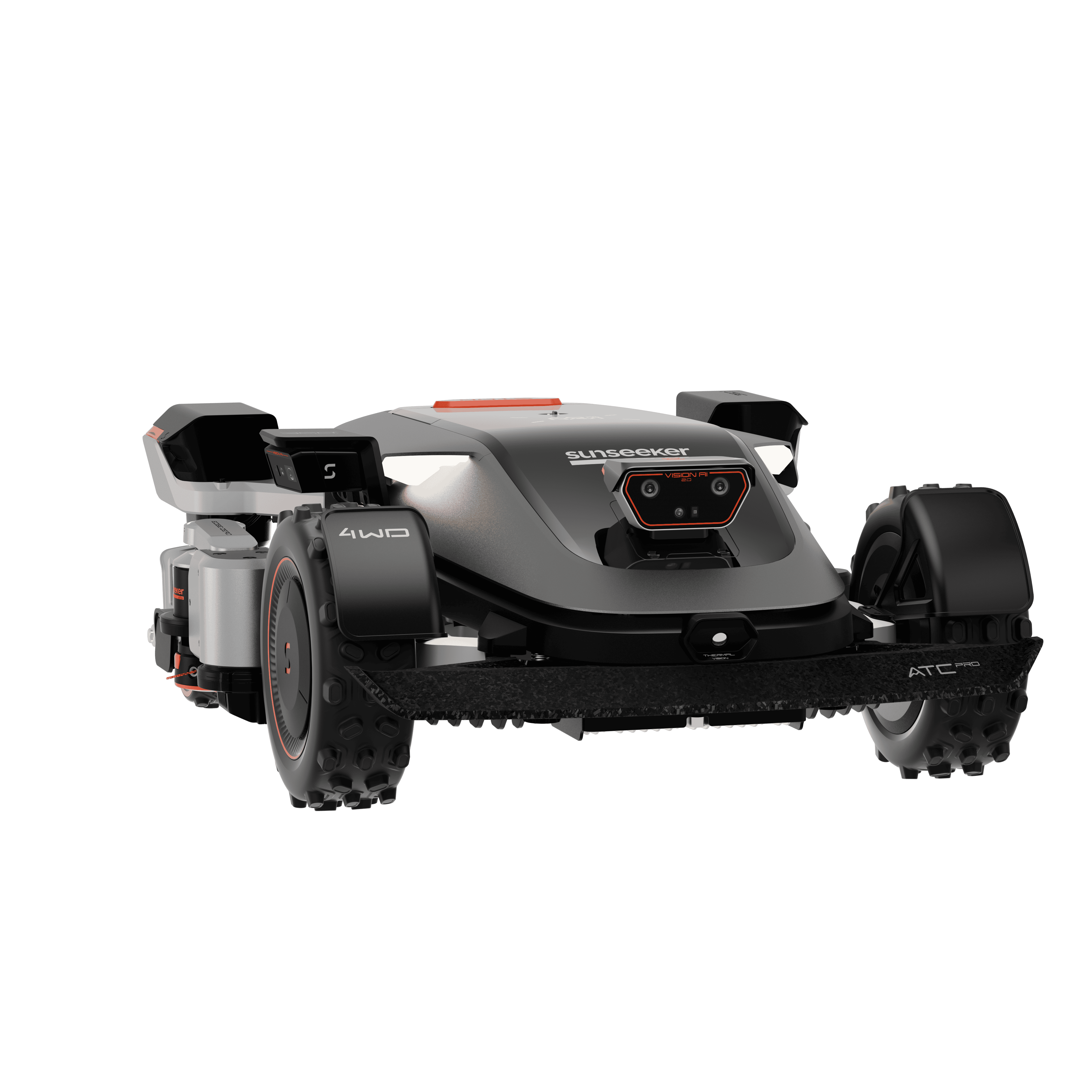
On larger yards, routine mowing also helps keep problem areas visible before they spread. Sunseeker Elite X9 is built for large-area maintenance, with Sunseeker’s AONavi positioning, app-based scheduling, and multi-zone mapping helping the mower keep established lawns at a steady height. That regular cut pattern can make new yellowing, thin spots, or high-use dog areas easier to notice during normal lawn care.