



FAQs
11/27/2025
Contents
Products
Residential Lawns




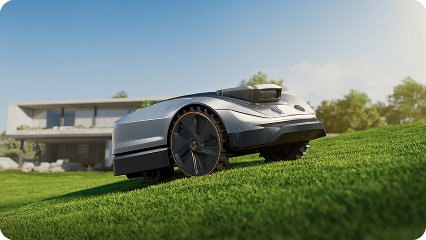
Commercial Landscapes
Explore
Where to Buy


Remember when cutting the cord meant freedom from tangled headphones? Now that same concept is revolutionizing lawn care. Wire-free robot mowers have arrived, promising a new level of convenience in automated lawn maintenance. But are these high-tech gadgets ready to handle your backyard, or are they better suited for tech enthusiasts with perfectly rectangular lawns? Let's cut through the marketing hype and examine how these cord-free systems actually perform compared to their wired counterparts, what makes them tick, and whether your property is ready to go wireless.
The biggest decision in robot mowing isn't just the brand; it's the technology. Do you opt for the proven reliability of a boundary wire, or embrace the cutting-edge convenience of a wire-free system? Here's how they stack up in real-world conditions.
Traditional wired mowers turn installation into a landscaping project. You'll be burying wires, troubleshooting signal breaks, and potentially spending your entire weekend on setup. Wire-free models, in contrast, typically need just a quick base station placement and a walk around your property with the mower to map boundaries.
That buried wire becomes a hidden liability. Lawn aerators, shovel-wielding gardeners, and curious pets can break the connection, leading to frustrating diagnostic sessions with a signal detector.
Wireless systems eliminate this vulnerability entirely. Their maintenance involves software updates and occasional sensor cleaning, trading physical repairs for digital maintenance that often happens automatically while the mower charges.
With wired systems, changing your lawn layout means digging up and rerouting physical wires. Wireless systems offer remarkable flexibility through their virtual mapping.
Want to expand that garden bed or create a new planting area? Simply redraw the boundaries in your smartphone app. This makes wireless systems ideal for properties undergoing landscaping changes or for homeowners who like to regularly update their outdoor space design.
Wired mowers deliver consistent edge cutting because they follow a physical guide. Wireless models rely on digital positioning, which can sometimes create slightly less precise edges near complex borders. However, modern RTK GPS systems have narrowed this gap significantly, with most premium models achieving near perfect edge following in normal conditions.
|
Aspect |
Wired Robot Mowers |
Wire-Free Robot Mowers |
|
Installation |
Boundary wire burial required, often a multi-hour or weekend task |
Fast setup with app-driven virtual mapping or wireless base placement |
|
Long-Term Maintenance |
Potential wire breaks due to digging, pets, garden work requiring repair |
Mostly software updates and occasional sensor cleaning instead of physical fixes |
|
Flexibility |
Physical wires are fixed; changes require digging and rerouting |
Highly flexible virtual boundaries that can be updated anytime via app |
|
Edge Precision |
Consistent edge following due to physical boundary wire |
Slightly variable edge precision, although RTK GPS and Vision AI are narrowing the gap |
|
Performance on Complex Lawns |
Strong edge consistency and reliable coverage |
Excellent adaptability to multi-zone and evolving gardens |
|
Typical Price Range |
More affordable: €800–€1,800 |
More expensive: €1,500–€3,000 |
So, how do these mowers navigate your lawn without a physical guide? They rely on a suite of sophisticated technologies that create a digital understanding of your yard. Let's break down the core systems that make autonomous, wire-free mowing possible.
Think of RTK-GPS as giving your mower its own high-precision GPS. It uses a stationary base station in your yard to correct standard satellite signals, achieving centimeter-level accuracy. This creates a reliable "virtual fence" around your property, allowing the mower to follow efficient, straight paths and know its exact location at all times, which is ideal for open lawns with clear sky views.
Some models use cameras and artificial intelligence to "see" their surroundings. This technology allows the mower to identify boundaries by recognizing the difference between grass and non-grass surfaces like pavement or mulch.
A key advantage is its ability to detect and avoid unexpected obstacles in real-time. While highly effective, its performance can be influenced by lighting conditions and may require clearer visual boundaries to operate optimally.
Beyond just knowing where it is, a great wire-free mower needs intelligence to decide where to go. Advanced algorithms analyze the lawn's shape and size to calculate the most efficient mowing pattern. This ensures complete coverage without unnecessary overlap, saving time and battery life.
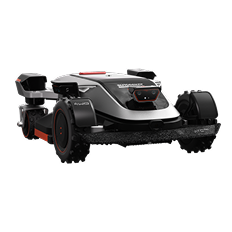
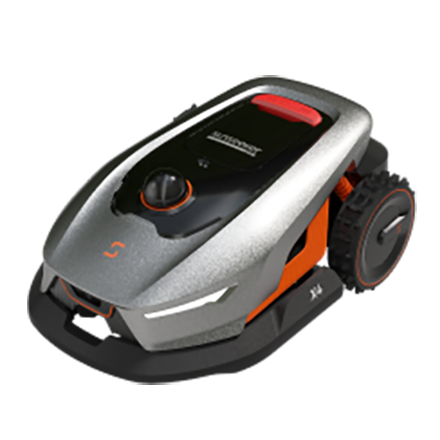
The system can also adjust routes dynamically when navigating complex obstacles, maintaining a clean, uniform finish. Models like the Sunseeker Elite X7 take this even further with AONAVI™ system (RTK-GNSS+VSLAM) and adaptive planning, allowing the mower to react instantly to changing terrain and deliver a consistently precise cut across challenging layouts.
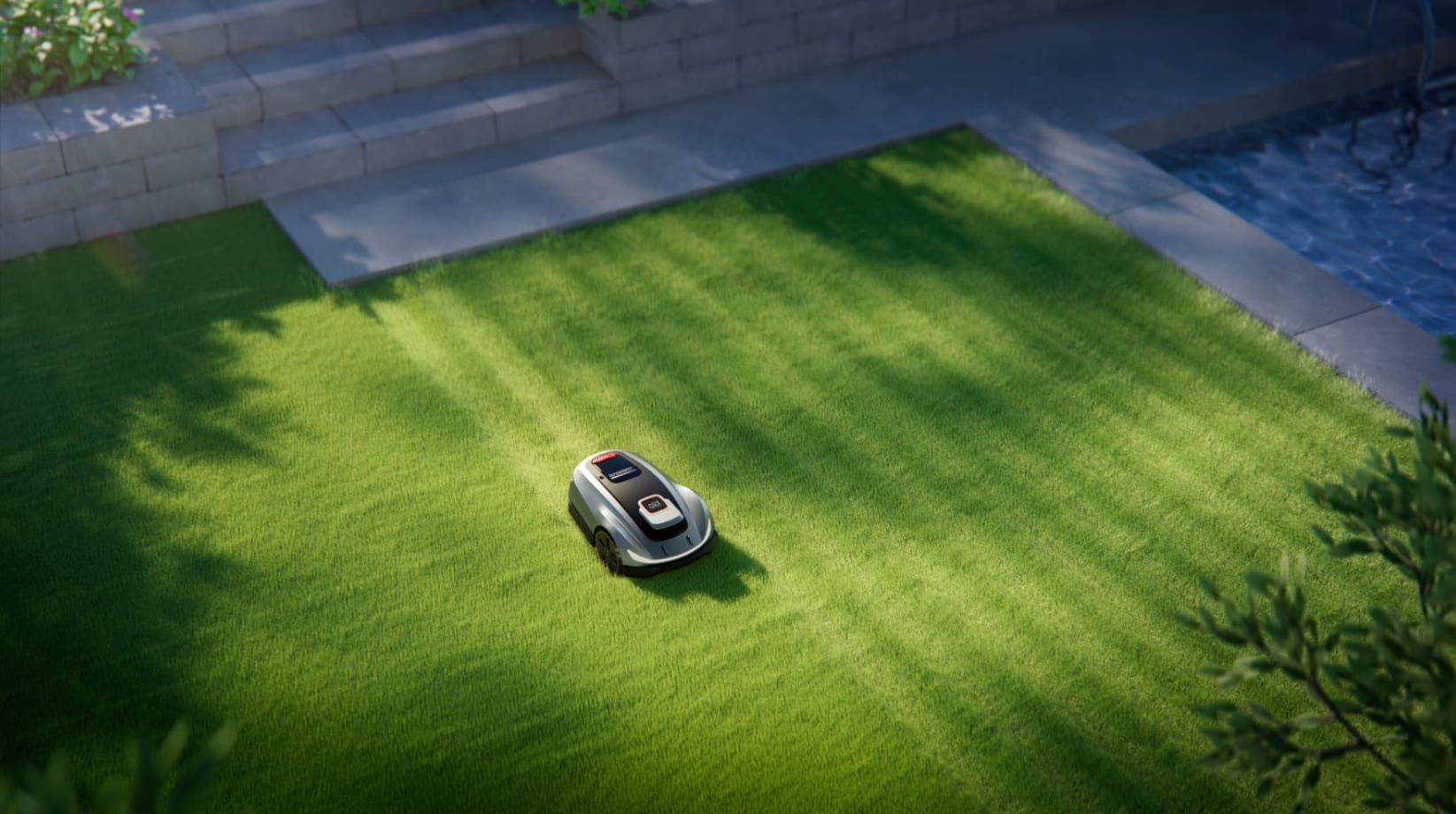
Sunseeker Elite X7 with Intelligent Path Planning
While technical specifications provide a foundation, the true measure of these systems lies in how they maintain your lawn through continuous operation.
In optimal conditions with good GPS coverage, you'll struggle to see any difference between wired and wireless cutting precision. The lines are clean and edges are sharp. However, in areas with signal challenges, you might notice slightly less perfect edge following. For most homeowners, the difference is negligible and far outweighed by the convenience benefits.
Wireless systems typically excel at obstacle detection. Using combinations of ultrasonic sensors, bump sensors, and cameras, they can detect and navigate around objects well before making contact. This intelligent approach often works better than the bump and turn method used by many wired models, potentially reducing wear on both the mower and your garden decorations.
Modern robot mowers demonstrate impressive weather adaptability, operating reliably in light rain and fog while maintaining stable GPS connectivity. Their intelligent weather detection systems will automatically guide them back to the charging station when conditions become severe, ensuring both safety and system protection.
This balanced approach allows them to maximize mowing opportunities during typical weather variations while proactively safeguarding against potential damage from extreme conditions.
This is where wireless systems truly shine. Navigating between front, back, and side yards requires no special wiring or manual intervention. The mower simply follows its mapped paths through gates and passages, automatically moving between zones according to your schedule. It's a game changer for properties with multiple distinct lawn areas.
Ready to consider going wireless? Here's how to match the right system to your needs and budget.
Consider your property's specific features. Large, open lawns benefit from RTK GPS systems that excel in wide spaces. Properties with many obstacles and complex borders might prefer vision based systems. For most homeowners, hybrid systems offering both technologies provide the best balance of precision and adaptability.
Look beyond the marketing claims and focus on slope handling capability measured in percentage, battery capacity in ampere hours, cutting width in centimeters, and waterproof ratings. A model with all wheel drive, at least 30 percent (17°) slope handling, and IPX5 waterproofing will handle most residential lawn challenges comfortably.
Wireless technology generally comes at a higher upfront price, with most reliable systems beginning around €1,600. This cost reflects improved navigation accuracy, smarter automation, and stronger long-term durability. When comparing options, also factor in the hidden expenses of wired models, such as installation labor and potential wire repairs over time.
If you want a clearer picture of how leading wire-free brands differ in both performance and pricing, you can refer to our guide Best Robot Lawn Mowers Without Perimeter Wire: Smart Mowing Made Simple.
Choosing established brands with proven track records and transparent software update policies ensures your investment grows over time. The best systems continuously improve through firmware updates that refine navigation and introduce new features. Since advanced technology depends on dependable after-sales support, it is wise to check the company’s service reputation before committing to a purchase.
Going wireless with your robot mower is not the ideal choice for every property, but for the right homeowner, it offers a major upgrade in convenience and control. Today’s wire-free systems are far more reliable, providing easy installation, flexible zone management, and intelligent navigation that adapts to changing environments.
For lawns with good satellite visibility and owners comfortable with smart technology, wire-free mowing can turn routine maintenance into a fully automated experience. Brands such as Sunseeker continue pushing the category forward with advanced RTK and Vision AI solutions. If you are considering an upgrade, now is an excellent time to explore which system best fits your space.
If you're on a budget and don't mind dealing with boundary wire installation and occasional maintenance, a wired robot mower could be a good option. However, the ongoing upkeep and limitations of wired systems may offset the initial savings. For those seeking the best long-term value, a boundary-free robot mower is the smarter choice. While the upfront cost is higher, the time and effort saved on installation and maintenance make it a more worthwhile investment over time.
No. Most wire-free models require only placing the charging station and completing a quick mapping run. Setup usually takes under 15 minutes, with no digging, burying, or boundary wire troubleshooting needed.
Users typically only clean the mower, replace blades periodically, and check the wheels. With no perimeter wire to repair, upkeep is far easier than with traditional wired models.