



FAQs
11/18/2025
Contents
Products
Residential Lawns

Commercial Landscapes
Explore
Where to Buy


Tired of sacrificing your weekends to tame your large lawn with a loud, gas-guzzling mower? It's time to meet your new robotic assistant. Built for big jobs, these robot mowers work quietly in the background, turning a day-long chore into a fully automated delight. Ready to learn how they can transform your expansive yard—and your schedule?
Maintaining a large lawn is rewarding, but it can also be one of the most time-consuming outdoor tasks for homeowners. Whether managing a spacious suburban yard, a rural property, or a multi-zone landscape with slopes, trees, and uneven ground, the weekly mowing cycle quickly becomes a chore. This is where modern robot lawn mowers step in.
Once limited to small, simple lawns, robot mowers have evolved dramatically over the past few years. Today’s high-end models can handle 4000m², 8000m², or even more, complete with GPS navigation, all-wheel drive, long-runtime batteries, and smart app integration that keeps the entire process automated.
If you're considering a robot mower for a large lawn, this guide breaks down everything you need to know, from the benefits to the exact features that matter most, to the top models.
Large lawns present more challenges than the average compact garden. Bigger distances, more obstacles, tougher terrain, and longer maintenance cycles all influence the workload. A premium robot mower helps solve these challenges in several ways.
For property owners managing 3000m² or more, manual mowing often consumes 2–4 hours per session, especially when factoring in trimming, cleanup, and refueling or charging.
With a robot mower, that entire commitment disappears. Once the schedule is set, the machine handles mowing automatically—daily, weekly, or whatever frequency suits your climate and grass growth rate. This means more time for family, gardening projects, or simply enjoying the yard instead of maintaining it.
Robot mowers operate on a "little and often" principle, mulching tiny grass clippings and leaving them on the lawn as natural fertilizer. This continuous, gentle cutting encourages thicker, greener, and healthier turf.
Unlike traditional mowers that scalp the grass weekly, this method reduces weed invasion, improves moisture retention, and leads to a more resilient lawn that can better withstand drought and disease.
Large lawns rarely come in simple shapes. Many include multiple zones, slopes, long corridors between areas, big trees, garden beds, or narrow passages. These features can easily confuse older or basic robot mowers.
Models designed for large properties typically use advanced navigation systems such as RTK-GNSS, VSLAM, or Vision AI. These technologies help the mower stay on track, follow straight lines, and avoid obstacles with far more accuracy. Even when the docking station is far away, these systems keep the mower oriented so it can cover every section of the yard without missing patches or drifting off course.
While the upfront price is higher than a standard ride-on mower, the long-term savings are hard to ignore. Robot mowers run on electricity, so you’re not constantly buying fuel. They also have far fewer moving parts, which means less maintenance—no oil changes, no spark plugs, no filters, and far fewer surprise repairs.
Because they mow lightly and frequently, they also improve lawn health over time. A healthier lawn needs less fertilizer, less watering, and fewer weed-control treatments, which puts even more money back in your pocket.
If you want a clearer picture of how much these savings add up, take a look at our full breakdown in Are Robot Mowers Worth the Money? The True Cost Explained, where we walk through the long-term value step by step.
The near-silent hum of a robot mower is a stark contrast to the roar of a gas-powered machine. This means it can work early in the morning or late in the evening without disturbing your family or neighbors. Being fully electric, it produces zero direct emissions, making it a clean, sustainable choice for maintaining your little piece of nature.
Choosing the right model is about matching the machine's capabilities to your property's specific demands. Here’s what to scrutinize:
Total Area: Measure your actual grassy area precisely. It's wise to choose a mower rated for at least 20-30% more than your calculated area to account for obstacles, slopes, and growth during peak season, ensuring the mower isn't constantly overworked.
Slope and Terrain: Identify the steepest slopes on your property. Manufacturers rate slope handling as a percentage (e.g., 35%, 45%). Also, note if your lawn is split into multiple distinct zones (e.g., front, back, side), as this requires a mower with advanced multi-zone management.
Navigation Technology: For large lawns, basic random navigation is utterly inefficient. You need a model with systematic navigation—either RTK GPS or GPS-based (like EPOS). This ensures the mower travels in logical, parallel lines, covering every inch of your property without wasteful repetition or missed patches.
Battery and Runtime: Look for high-capacity Lithium-ion batteries that can deliver 3-4 hours of runtime. Coupled with a fast-charging station, this ensures the mower can cover maximum ground with minimal downtime.
Drivetrain and Cutting System: All-wheel drive (AWD) is essential for navigating uneven ground, wet grass, and steep inclines without getting stuck. A wider cutting deck (e.g., 12 inches or more) will also significantly improve mowing efficiency over a large area.
A companion smartphone app is non-negotiable. It should allow you to create and manage multiple zones, set complex schedules, track the mower's location in real-time, and receive notifications. Some premium models offer detailed lawn maps and cutting analytics.
Decide between DIY installation (common for wire-free GPS models) or professional installation (highly recommended for complex properties or models requiring an RTK base station). For maintenance, regularly cleaning the underside and replacing the blades is typically all that's required to keep your investment running smoothly for years.
Now that you know what really matters when choosing a robot mower for a large lawn, it’s time to look at the models that consistently perform well in real-world conditions. Below are four standout robot mowers that bring the right mix of cutting performance, durability, and smart features to make large-lawn care truly effortless.
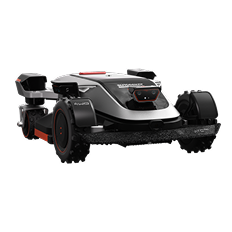
Segway’s Navimow stands out for its smooth mapping and impressively clean edging. With EFLS 3.0 technology and enhanced RTK coverage, it stays accurate even around trees or in partial shade. It covers up to 6,000m². While it’s not the strongest choice for steep slopes or very rough patches, it remains a solid match for users who prioritize tidy borders and reliable navigation on medium-to-large lawns.
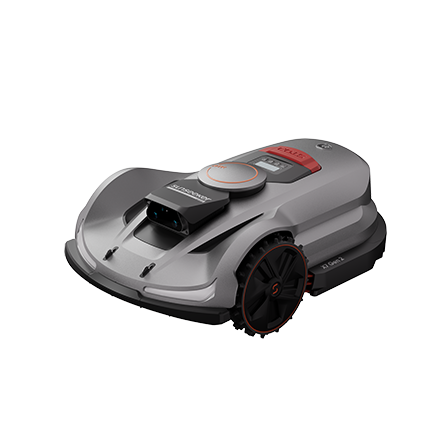
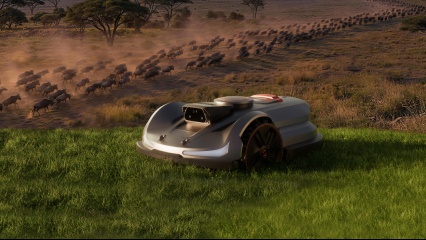
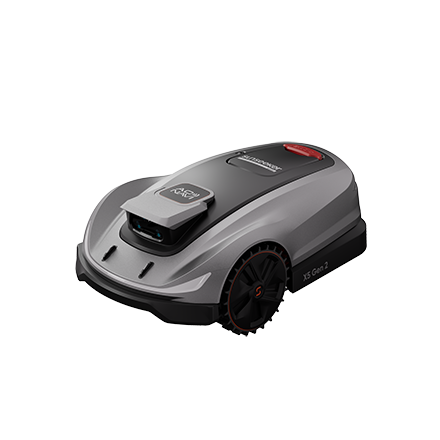
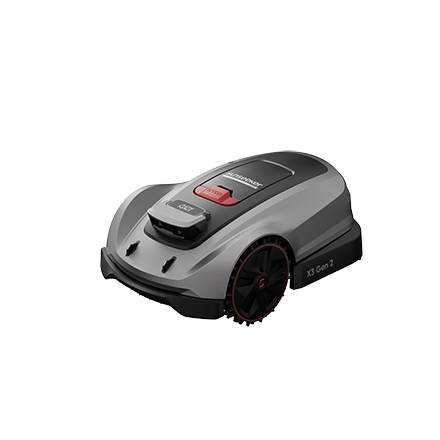
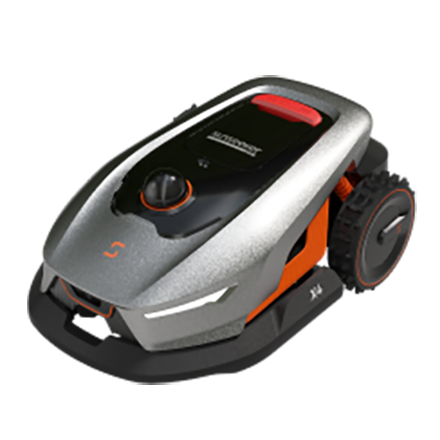
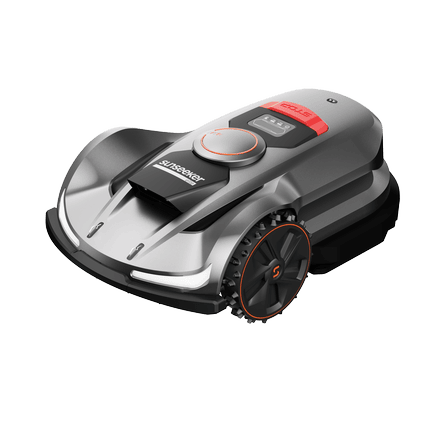
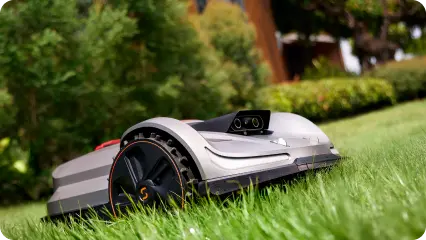
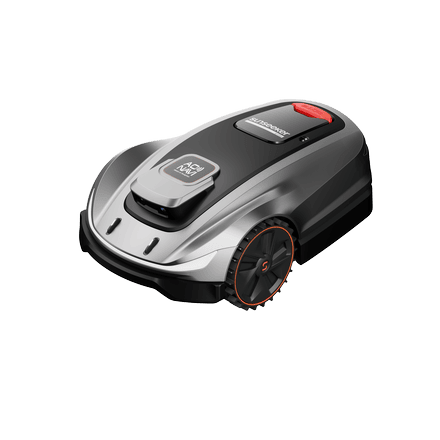
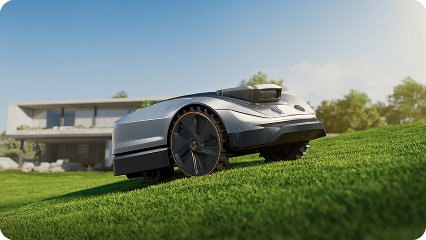
The Sunseeker Elite X7 Plus is engineered specifically for large, demanding properties up to 6,000 m². With a combination of RTK satellite precision and 3D Visual AI, it can navigate through trees, slopes, and multi-zone layouts with centimeter-level accuracy. Its dual-blade cutting deck covers wide areas efficiently, and wireless mapping gets everything set up in minutes, making big-lawn maintenance faster, smarter, and almost hands-free.
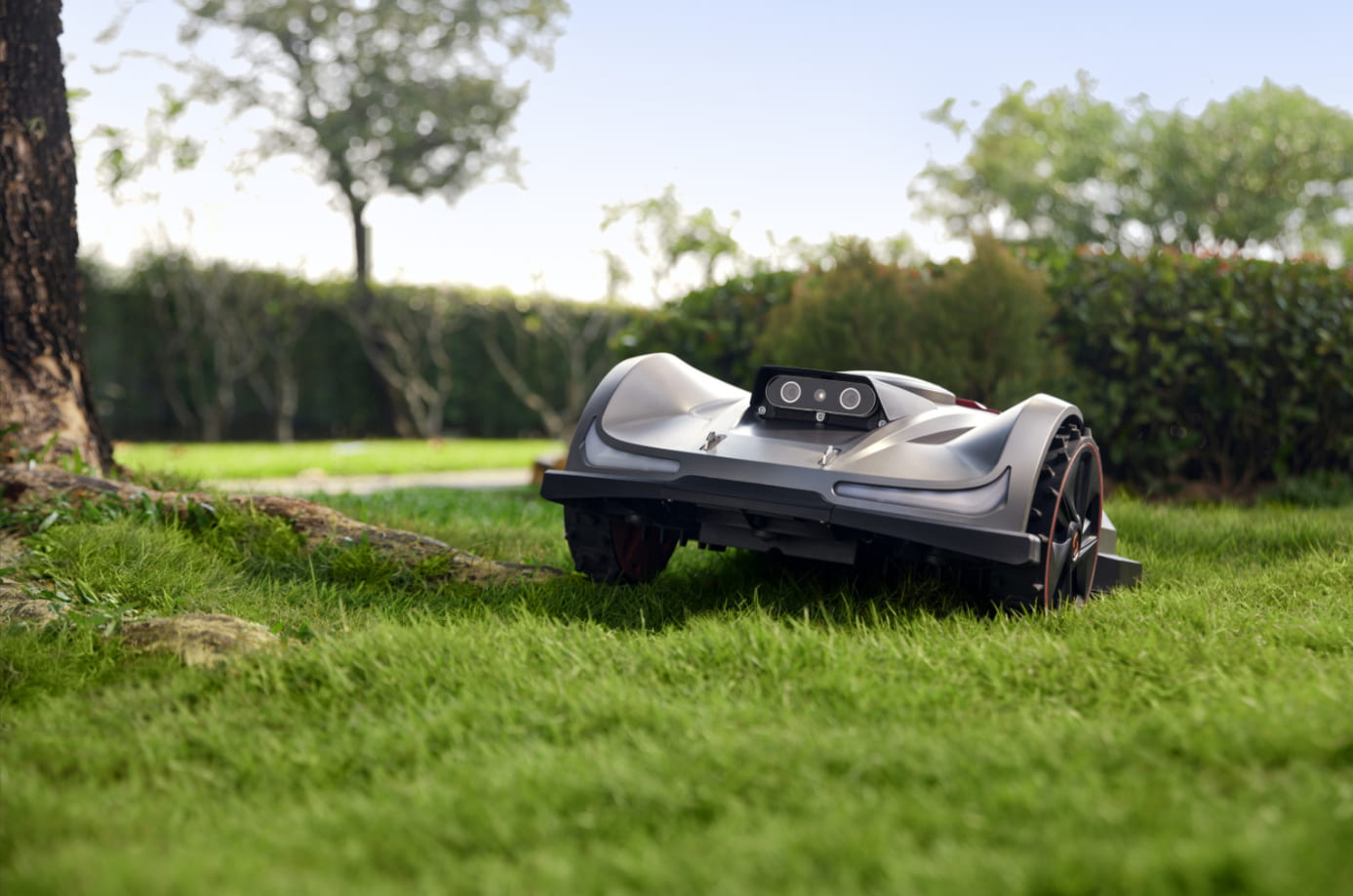
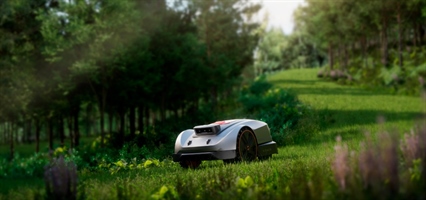
Sunseeker X7 Plus robot lawn mower operating on rough terrain
Luba is built like an off-road machine, great for hilly terrain, dense grass, and big rural yards. With AWD, heavy-duty tires, and the ability to handle slopes up to 80%, it powers through areas many mowers can’t. It easily handle up to 5000m²and, while its mapping isn’t the most precise, its raw traction and toughness make up for it.
Husqvarna remains one of the most trusted names in the industry, and the Automower 450X NERA continues to impress on very large lawns. While it still relies on boundary wires, its GPS-assisted navigation and high-capacity battery enable consistent performance across wide open fields. The mower also runs remarkably quietly, creating minimal disturbance. This is best for homeowners who want a reliable, long-lasting mower for a large, mostly flat yard.
|
Model |
Coverage Area |
Slope Handling |
Navigation System |
Notable Features |
Price Range |
|
Segway Navimow X350 |
Up to 6000m² |
Up to 50% (27°) |
EFLS 3.0 with enhanced RTK coverage + VSLAM |
Extremely clean edging, smooth mapping, stable performance under trees or partial shade |
~€3,799 |
|
Sunseeker Elite X7 Plus |
Up to 6000m² |
Up to 70% (35°) |
AONavi(RTK+VSLAM) Vision AI |
Dual-blade wide cutting deck, wireless mapping in minutes, high precision in multi-zone areas |
~€2,899—€3,199 |
|
Husqvarna Automower 450X NERA |
Up to 5000m² |
Up to 50% (27°) |
Physical wire boundary system + GPS assist |
Ultra-quiet operation, trusted brand reputation, full smartphone control |
~€4,999 |
|
Mammotion LUBA 2 AWD 5000X |
Up to 5000m² |
Up to 80% (38.6°) |
3D vision + RTK fusion |
AWD traction, heavy-duty tires, excels in rough terrain |
~€2,999 |
(Data sourced from official websites as of 17/11/2025 and provided for reference only)
Robot mowers for large lawns are no longer niche tools. They have become reliable, intelligent, and highly capable machines that save homeowners time, effort, and long-term maintenance costs. Whether you're managing rolling hills, multiple zones, shaded areas, or simply a very large open yard, the right robot mower transforms a full afternoon chore into a fully automated process.
Models like the Sunseeker Elite X7 Plus, Husqvarna 450X NERA, Navimow X350, and Luba 2 AWD 5000X, each bring their strengths, whether you prioritize slope climbing, precision mapping, edging quality, or maximum coverage.
If you're ready to take the next step toward automated lawn care, explore today’s top robot mower options and choose the one that matches your lawn size, terrain, and maintenance preferences. A smarter, easier lawn-care routine is only one decision away.
Yes, but it requires a high-capacity model designed for large properties. These heavy-duty mowers feature robust batteries, all-wheel drive for challenging terrain, and advanced navigation systems to efficiently manage such an expansive area without compromising on performance.
Most models get very close, leaving just a minimal uncut strip. For complete edge-to-edge coverage, look for specific features like an "edge cutting" mode or a design that allows the blade to extend slightly beyond the chassis on one side for maximum reach.
Commercial-grade models can efficiently maintain areas of 20000m² or more. However, for residential use, you don’t need a commercial-grade model. A more affordable, home-use robot mower can efficiently cover up to 6000m², making it a practical option for most typical lawns.
For optimal performance, always select a mower with a maximum rated area that exceeds your lawn's actual size by at least 20% to account for obstacles, slopes, and complex layouts.