



FAQs
11/21/2025
Contents
Products
Residential Lawns


Commercial Landscapes
Explore
Where to Buy


When you think of a robot lawn mower, the typical image is of it gliding across a flat, sunlit suburban lawn, just like in most advertisements. But what if your home is situated on a hillside, such as among the vineyard hills of Germany or or the England Lake District. Not all robotic mowers are built to handle such demanding terrain. So, this guide covers the challenges of sloped lawns, how advanced mowers manage hills, and practical tips for maintaining your mower on uneven or steep landscapes.
Understanding slope performance is essential before selecting any robot mower. Slopes are measured in two formats: degrees and percentages. A percentage expresses the ratio of vertical rise to horizontal distance. For example, a 25 percent slope means that the lawn rises one unit for every four units of horizontal length.
If you'd like to see the incline in degrees, you can use the helpful conversion tool provided here or refer to the common slope conversion table below. Understanding this conversion helps you compare models accurately and match them to your lawn's actual conditions.
|
Degrees (°) |
Percentage (%) |
|
15° |
27% |
|
20° |
36% |
|
25° |
47% |
|
30° |
58% |
|
35° |
70% |
|
40° |
84% |
Slope capability directly affects safety, traction, and cutting consistency. A mower with insufficient grade performance may slip, lose direction, or apply uneven pressure against the turf. These issues lead to patchy cutting, wheel rutting, and motor strain. Choosing a model designed for incline management protects both the equipment and the lawn’s health.
Most homes fall within moderate slope levels, but the differences can be wide. Lawns with gentle curves typically stay under 15 percent, which basic robot mowers manage easily.
Suburban yards with terraces or drainage shaping often include 20 to 30 percent slopes that need better traction and upgraded wheels. Rural or hillside properties commonly exceed 35 percent, requiring stronger motors, advanced navigation, and all-terrain drive systems.
Sloped or uneven lawns present multiple technical and physical challenges that require thoughtful engineering. The following sections describe the main difficulties robotic mowers must overcome and why terrain-adapted design makes a significant difference.
The most common challenge is simple traction. Wet grass, loose soil, and steep inclines can cause wheels to slip. Slippage does not only interrupt mowing sessions. It also damages turf, creates bare patches, and forces the mower to re-cut the same area multiple times. Slippage is more likely on clay soil, new turf, or areas with heavy shade where moisture lingers.
Uneven ground causes the cutting deck to tilt, which produces irregular results. Higher spots may be left uncut, while lower sections may be scalped. This inconsistency creates a distracting visual effect and can weaken turf health. Advanced models with floating decks or multi-axis cutting systems compensate for the terrain by adjusting the blade assembly in real time.
Hills often feature exposed roots, stones, depressions, or edges where the landscape changes abruptly. Older robot mowers may mistake these surfaces for obstacles and repeatedly turn away, leaving unfinished patches. Vision-based navigation helps identify these irregularities and follow a predictable pattern.
High trees, buildings, cliffs, and valley shapes can reduce the accuracy of satellite-based navigation systems. When precise positioning is critical, interference can lead to misaligned paths or repeated loops in the same zone. Premium devices incorporate visual AI, multi-sensor fusion, and enhanced antennas to maintain stable navigation even in complex terrain.
A robot mower consumes more energy while climbing. Long working hours on steep lawns require higher battery capacity, efficient power management, and intelligent routing. Models with insufficient endurance may fail to complete a session or return prematurely to recharge.
When choosing the best robot lawn mower for steep hills, it’s important to focus on features that directly influence its performance, safety, and dependability on sloped terrain. Here are the key factors to weigh:
Slope ratings vary widely among robotic mowers. Entry-level models may handle 20 percent grades, while advanced hillside models may handle 35 percent or more, offering far greater stability and performance on challenging terrain.
A reliable drive system is the foundation of slope performance. All-wheel drive (AWD) is arguably the most important feature for slope performance. Unlike two-wheel drive models that can lose traction easily, AWD systems power all four wheels simultaneously, distributing torque evenly and preventing wheel spin. This makes a dramatic difference on wet grass and steep inclines.
Look for models with deep-tread tires designed for outdoor terrain. These provide significantly better grip than smooth wheels, especially on damp surfaces. Some premium models even offer rubber-track options for extreme conditions. The floating cutting deck is another crucial feature that maintains consistent cut height across uneven ground surfaces.
For navigation, RTK-GNSS systems combined with vision AI create the most reliable solution for complex terrain. The RTK provides centimeter-accurate positioning, while visual sensors help the mower avoid obstacles and adjust to ground-level challenges. This combination is particularly valuable on properties where trees or structures might interfere with pure GPS navigation.
Properties with slopes often include multiple lawn sections, gardens, and obstacles. Flexible mapping tools are essential. Wireless mapping allows users to create zones, no-mow areas, and transitions directly through the app without installing wire. Virtual mapping also avoids issues caused by soil movement or erosion on steep slopes.
Sloped and uneven lawns increase energy demand, especially when climbing hills or traversing rough ground. A long-lasting battery allows the mower to complete large sections without frequent recharging. Quick recharge times and intelligent charging management also help minimize downtime, keeping the lawn consistently maintained.
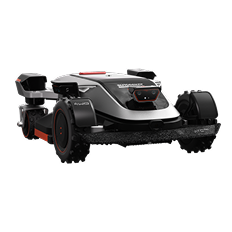
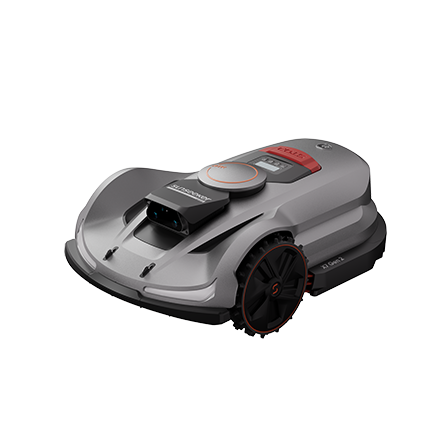
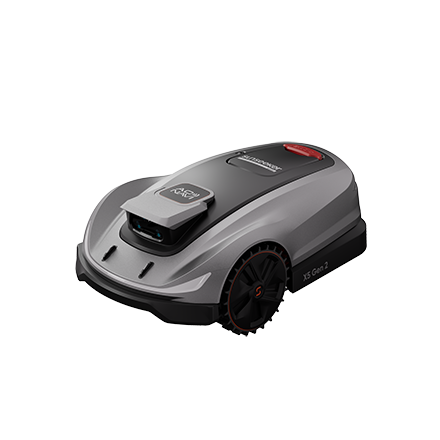
The Sunseeker Elite X-Series combines RTK satellite navigation, 3D Visual AI, and wireless setup, making it ideal for uneven or sloped lawns. Key performance features include:
Slope handling between 17–35°, providing stability on steep inclines and rolling terrain—see the comparison table below for each X-Series model’s specific capabilities
Dual-blade cutting deck for wide, even coverage across complex lawns
Long runtime with fast recharging, ensuring large areas are maintained without interruption
App-based control and zone mapping, allowing scheduling, no-mow areas, and real-time monitoring
|
Feature / Model |
X3/X3 Plus |
X5 |
X7/X7Plus |
|
Max Cutting Area |
1200m² |
2000m² |
3000m²/6000m² |
|
Slope Handling |
30% / 17° |
60% / 30° |
70% / 35° |
|
AWD System |
NO |
YES |
YES |
|
Cutting Height/ Cutting Width |
1.6-3.2 In/8 In |
1.6-3.2 In/8.6 In |
0.8-4.0 In/14 In |
|
Charge Time/ Run Time |
120min/90min |
120min/90min |
90min/150min |
|
Rain Sensor/ Waterproof Level |
YES/IPX5 |
YES/IPX5 |
YES/IPX5 |
|
Floating Cut |
YES |
YES |
YES |
|
Smart App Control |
YES |
YES |
YES |
Sunseeker’s X-Series is engineered for homeowners who want a robust, precise, and mostly hands-free solution, capable of tackling hills, multi-zone layouts, and decorative landscaping without compromising lawn health.
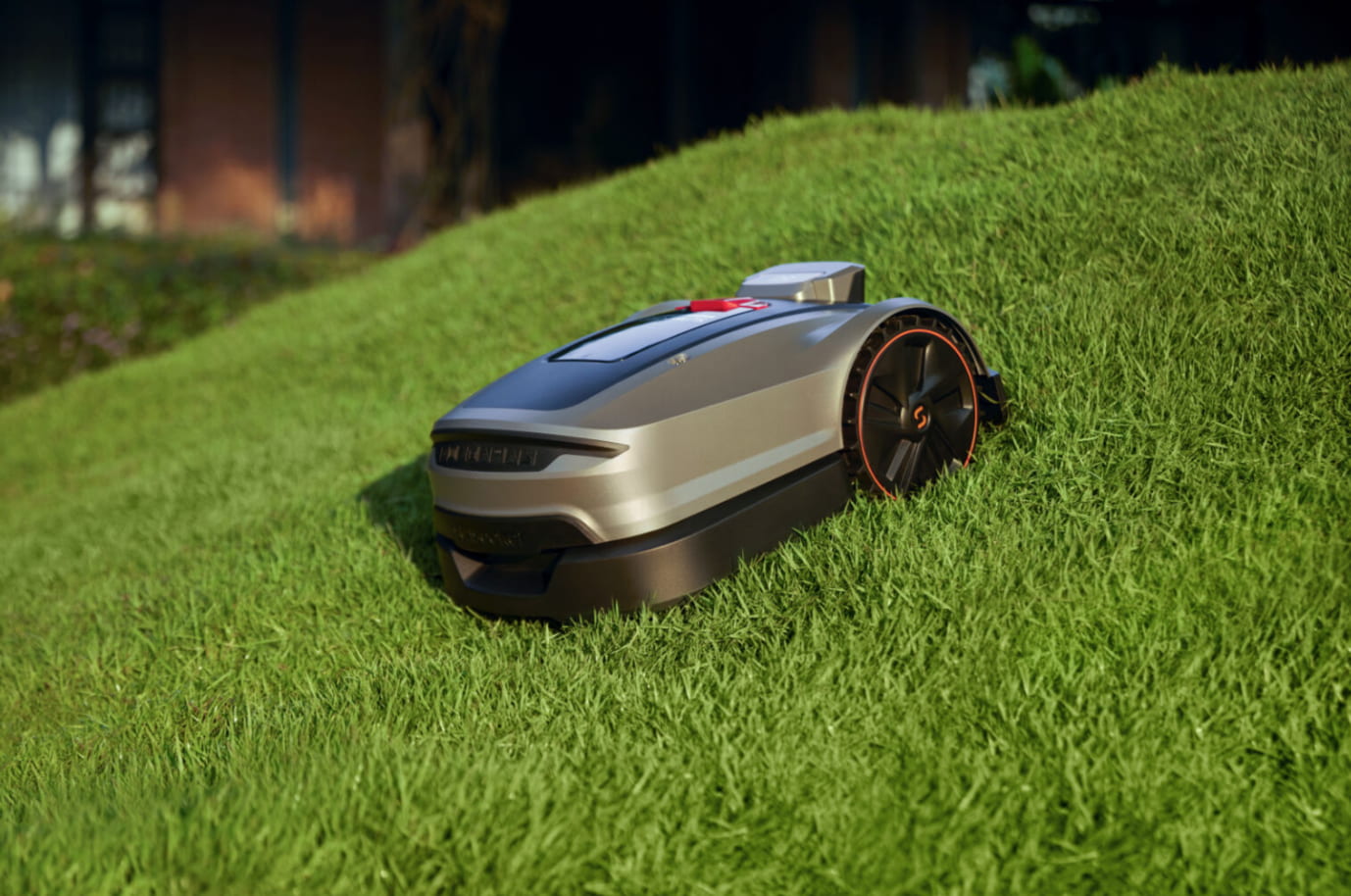
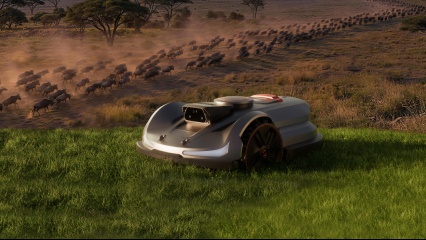
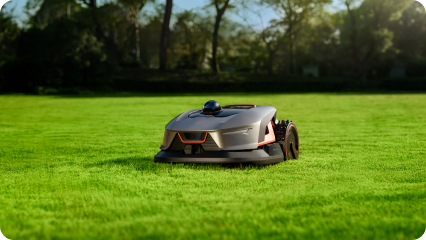
Sunseeker Elite X3 Plus Climbing on a Sloped Lawn
Maintaining a robot mower in top condition is especially crucial for sloped lawns, where the added strain on wheels, motors, and batteries can accelerate wear and tear. Adopting a few simple maintenance habits can greatly extend its lifespan and ensure consistent performance:
Robot lawn mowers can work extremely well on uneven and sloped lawns when equipped with the right technology. Advanced models that offer strong traction, precise navigation, adaptive cutting, and reliable mapping can outperform traditional mowers in both consistency and convenience.
Systems like the Sunseeker Elite X-Series demonstrate how modern robotics can navigate complex topography with accuracy that was not possible only a few years ago.
For homeowners with hills, rolling terrain, or mixed surfaces, choosing a model designed specifically for slope management delivers a smooth, automated mowing experience that stays reliable throughout the year. With the proper setup and basic maintenance, a robotic mower can transform even the most challenging landscape into a neatly maintained, visually appealing lawn with minimal effort.
Most advanced models can manage slopes between 20° and 30°, with some specialized all-wheel-drive mowers handling up to 35°–40°. Check the manufacturer’s specifications to ensure your property’s steep sections fall within safe operating limits.
Yes, models with adaptive traction, all-wheel drive, and advanced sensors adjust speed and cutting patterns on uneven surfaces. Properly mapped zones and slope-aware navigation help prevent slipping, uneven cuts, and equipment strain.
Yes, sloped or uneven lawns often need careful mapping, boundary setup, or RTK/virtual boundary configuration. Proper placement of the mower and adjustment of cutting zones ensures safe operation, consistent coverage, and prevents slipping or missed areas on challenging terrain.